The difference between a post that gets 50 likes and one that gets 500 is almost always the caption. Not the image. Not the hashtags. The caption.
The anatomy of a high-performing caption
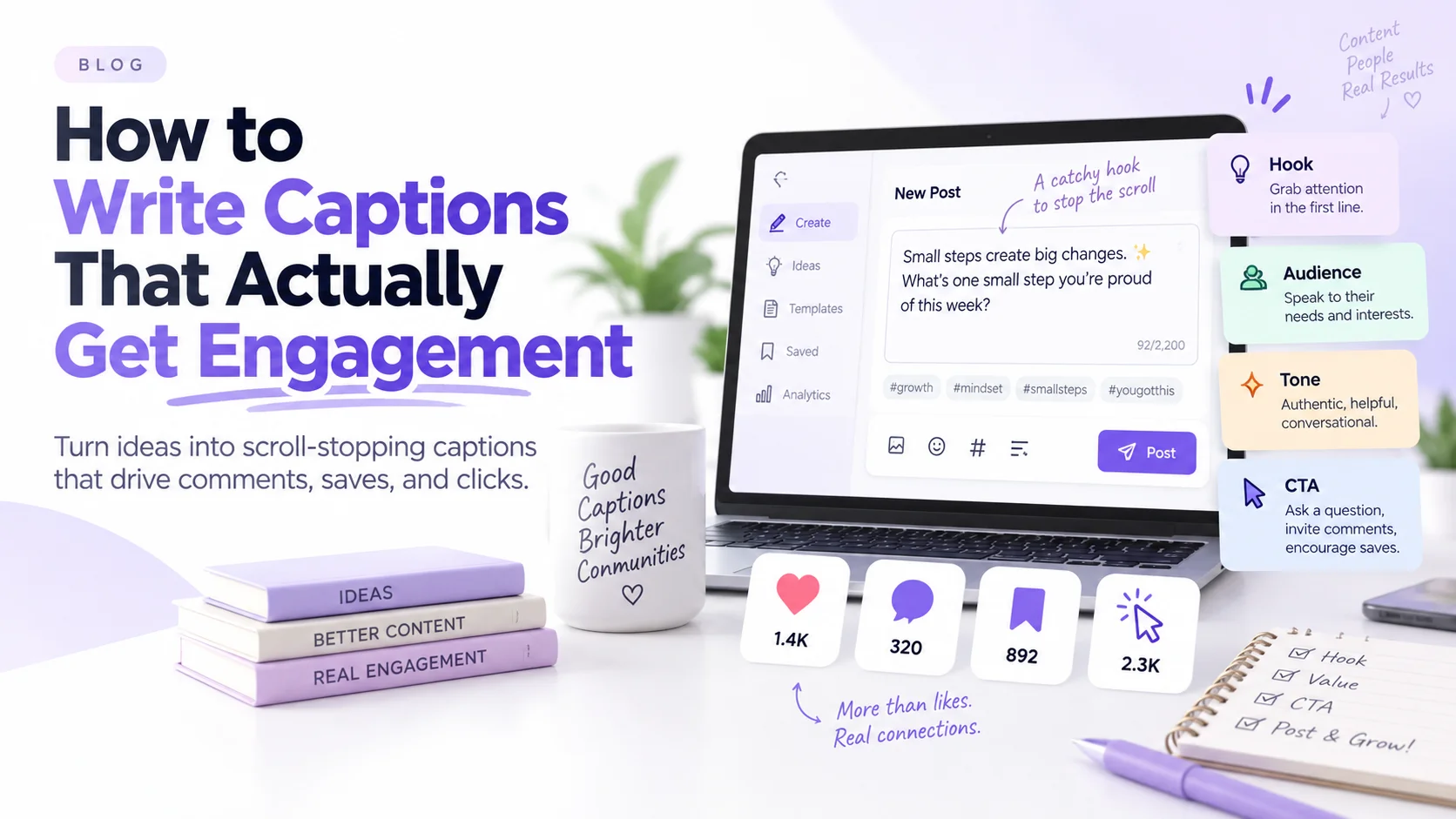
Every great caption has three parts:
1. The hook (first line)
This is the only thing people see before they decide to "read more." It needs to stop the scroll. Effective hooks include:
- Questions: "Ever wonder why your posts get zero comments?"
- Bold statements: "Your content strategy is broken. Here's proof."
- Numbers: "I went from 200 to 20,000 followers in 90 days."
- Curiosity gaps: "The one thing every viral post has in common..."
2. The body (value)
This is where you deliver on the hook's promise. Keep paragraphs short (1-2 sentences). Use line breaks generously. Make it scannable.
3. The CTA (call to action)
Tell people exactly what to do next:
- "Save this for later"
- "Tag someone who needs to hear this"
- "Drop a 🔥 if you agree"
- "Link in bio for the full guide"
Caption formulas that work
The Story Formula: Hook → Problem → Struggle → Solution → CTA "I almost quit my business last year. [Story of struggle]. Then I discovered [solution]. Now [result]. Here's exactly what I did..."
The List Formula: Hook → Numbered tips → CTA "5 things I wish I knew before starting a business: 1. [Tip]..."
The Controversial Take: Bold opinion → Evidence → Invitation to discuss "Posting every day is killing your engagement. Here's why..."
Length matters
Short captions (under 50 words) work for simple messages. But long captions (150-300 words) consistently outperform for educational and storytelling content — IF the hook is strong enough to get people reading.
The secret nobody talks about
The best captions sound like you're talking to one person, not broadcasting to thousands. Write like you're texting a friend. That's your real voice, and that's what people connect with.