AI social media content helps you plan, create, adapt, and publish social posts faster. The real advantage is not producing more content—it is using AI with brand context, audience insight, a clear strategy, and human review so every post remains useful and recognizable.
What Is AI Social Media Content?
AI social media content is content created or assisted by artificial intelligence for social platforms. Depending on the workflow, AI can support the process from the first idea to a publish-ready post.
Post ideas and hooks
Captions and social copy
Images, graphics, and product creatives
Video concepts and scripts
Content variations and repurposing
Hashtags, calendars, scheduling, and publishing support
The key distinction: AI can accelerate execution, but strategy still sets the direction. Better context generally leads to more relevant output.
Ask less “Can AI create content?” and more “Can AI create content that fits my brand, audience, platform, and goal?”
Why Use AI for Social Media Content?
AI reduces repetitive production work so teams can spend more time on strategy, creativity, and customers.
Create content faster:
Reduce the manual work behind research, ideation, writing, design, formatting, and publishing.
Stay consistent:
A repeatable AI workflow makes it easier to maintain a publishing rhythm instead of starting from zero every day.
Scale across platforms:
Adapt one core idea for Instagram, LinkedIn, YouTube, Pinterest, and other channels rather than copying one post everywhere.
Reduce creative fatigue:
Use AI to generate new angles, hooks, and variations when the blank page becomes the bottleneck.
That workflow helps organize content pillars, batching, scheduling, and performance review.

What Can AI Create for Social Media?
AI social media content now covers far more than captions. The most useful workflows connect ideas, copy, visuals, video, and repurposing.
Content ideas:
Topics, campaigns, educational angles, promotions, engagement questions, and seasonal ideas.
Captions and copy:
Instagram captions, LinkedIn posts, short-form copy, hooks, CTAs, and promotional messaging.
Visual content:
Social graphics, product imagery, ad creatives, thumbnails, and carousel concepts.
Video content:
Scripts, short-form concepts, hooks, visual direction, and repurposed video ideas.
Content repurposing:
Turn one strong asset into several native formats instead of reposting the same message everywhere.
Related: content repurposing
Start with one strong idea, then adapt the format, hook, visual treatment, depth, and CTA for each platform.

The Biggest Problems With AI Social Media Content
AI can make content production faster, but speed without context can create weak content.
Generic content: Broad prompts often produce copy that sounds familiar, repetitive, or interchangeable.
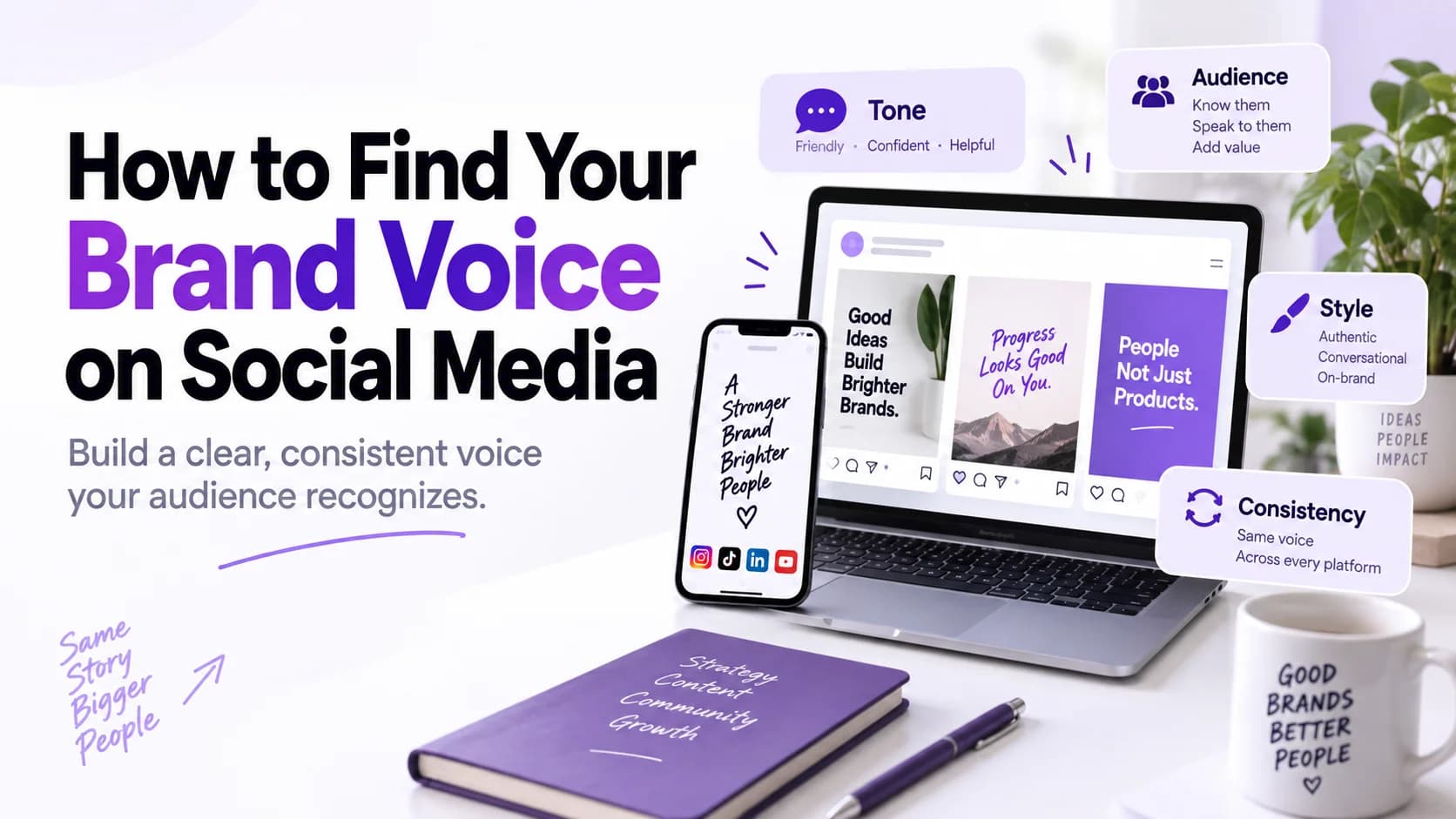
Loss of brand voice: Without your tone, positioning, audience, offers, and examples, AI is missing the context that makes your brand recognizable.
Platform mismatch: A strong LinkedIn post is not automatically a strong Instagram caption or YouTube title.
Too much automation: Publishing without review can introduce factual, tonal, visual, or product mistakes.

How to Create Better AI Social Media Content
The strongest AI workflow starts before generation. Give the system the context it needs, then build a repeatable process around it.
Step 1: Give AI your brand context: Define your audience, positioning, products, offers, communication style, content pillars, values, and visual preferences.
Step 2: Build a content strategy: Use three to five recurring pillars such as education, products, trust, behind-the-scenes, and promotions.
Step 3: Study your competitors: Look for repeated topics, formats, hooks, audience signals, and content gaps. Use competitor research to find opportunities, not copy ideas.
Step 4: Generate multiple angles: Test stronger hooks, contrarian ideas, beginner questions, expert objections, and customer problems instead of accepting the first draft.
Step 5: Create platform-specific versions: Keep the core idea, but change the packaging for each platform.
Step 6: Review before publishing: Check accuracy, usefulness, originality, brand voice, platform fit, and business goal.
Related: brand voice

How to Create Social Media Content at Scale
Scaling content means building a system—not publishing hundreds of random posts. A practical loop is:
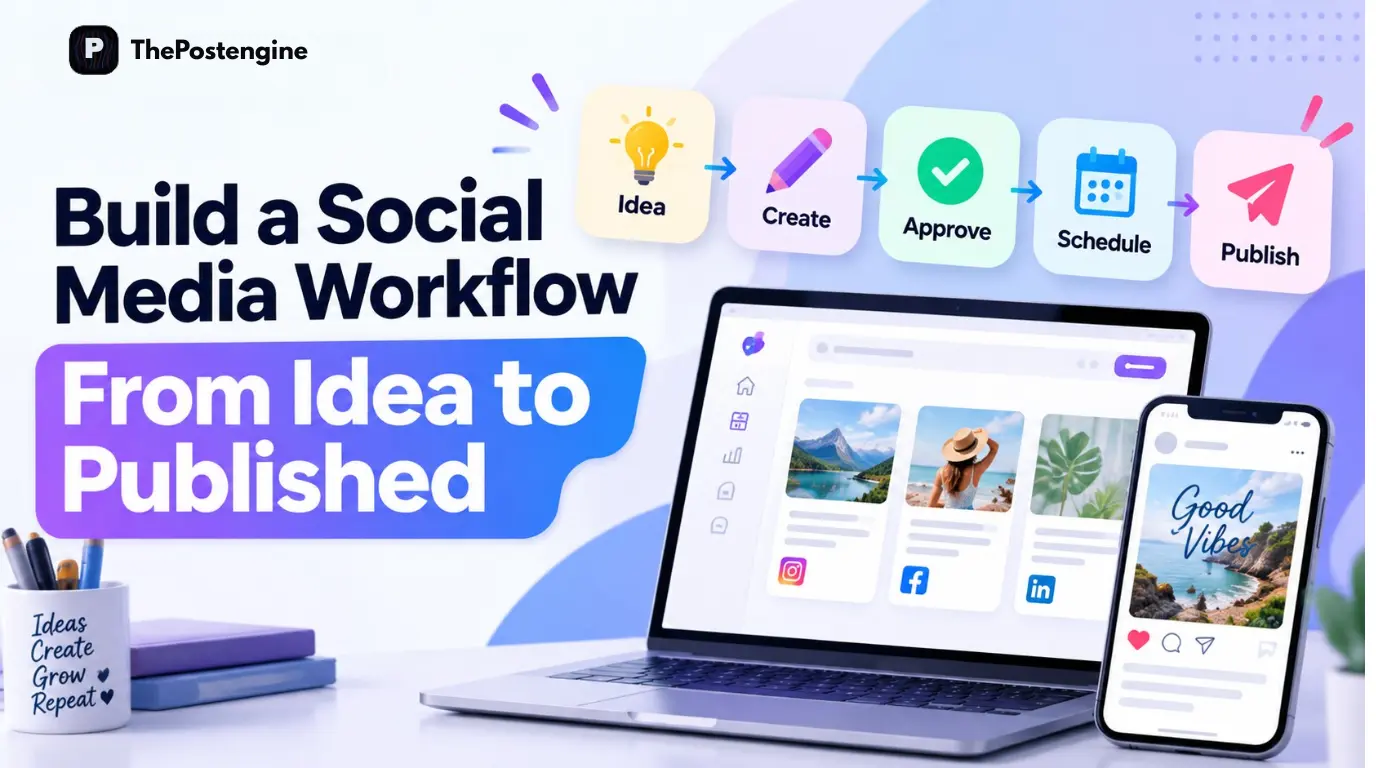
Analyze — understand your brand, audience, competitors, and past performance.
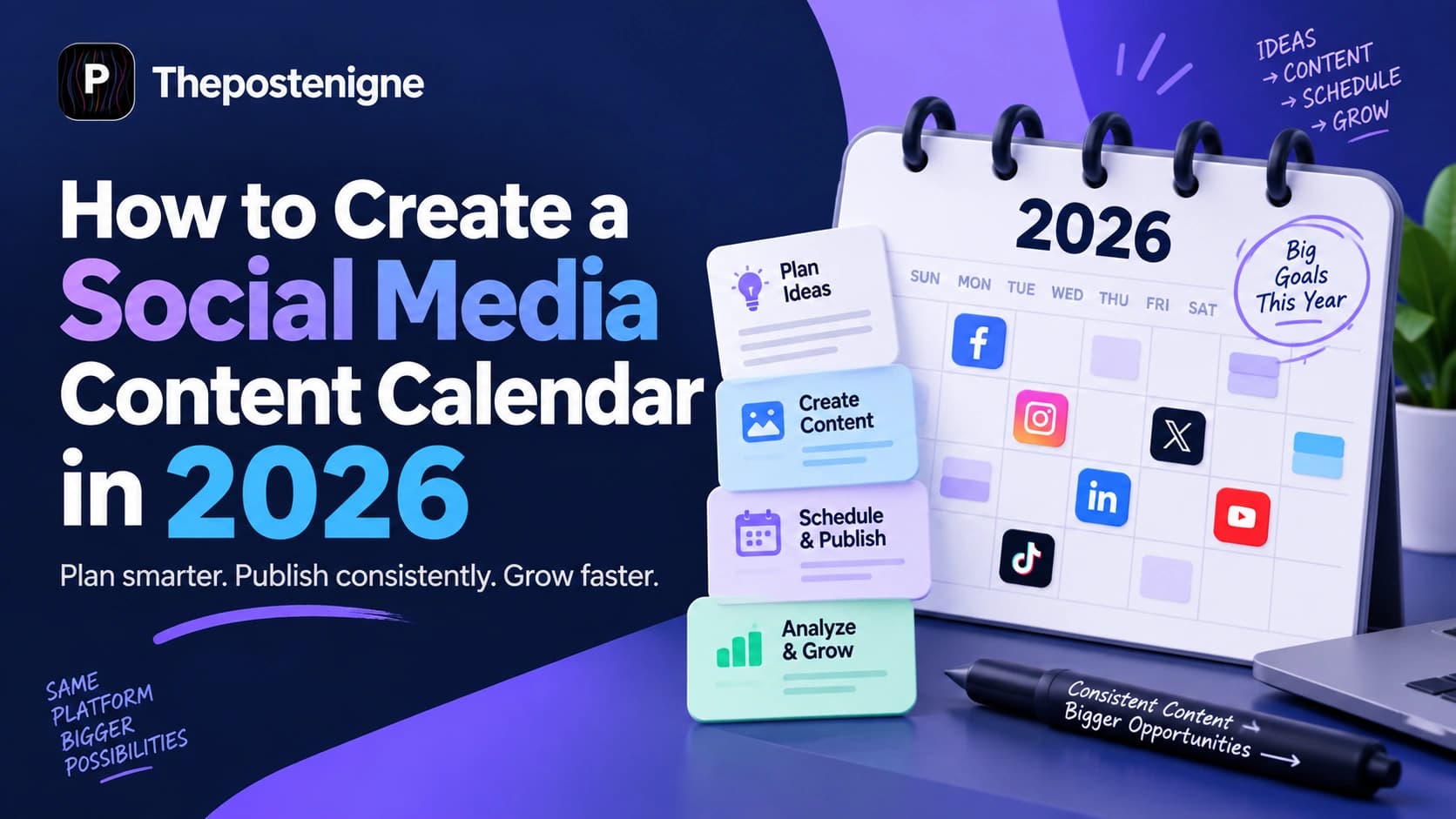
Plan — choose pillars, topics, formats, campaigns, and platforms.
Create — generate copy, visuals, videos, hooks, and variations.
Adapt — tailor the strongest ideas to each platform.
Schedule — organize the publishing calendar.
Publish — automate repetitive publishing where appropriate.
Analyze — use results to improve the next content cycle.
That feedback loop is more useful than repeatedly asking AI to “write a social media post.”

How to Keep AI Content On-Brand and Human
The fix for robotic AI content is usually better context, not less AI.
Use your real brand language: Give AI examples of how your company already speaks.
Give AI opinions, not just information: A clear point of view produces stronger content than a generic topic request.
Use real customer problems: Questions, objections, frustrations, and goals are better inputs than generic prompts.
Edit for personality: Remove phrases you would never say, add examples, strengthen the opinion, and keep the human voice.
AI Social Media Content for Different Platforms
The idea can stay the same while the format, depth, hook, and visual treatment change.
Instagram: Prioritize visual storytelling, carousels, Reels, product content, and strong hooks.
LinkedIn: Add expertise, professional context, business lessons, case studies, and opinions.
YouTube: Use AI for research, topic development, titles, thumbnails, scripts, and Shorts.
Pinterest: Lean into visual discovery, searchable topics, product inspiration, guides, and evergreen content.
Do not blindly duplicate one post everywhere. Create one strategic idea, then adapt it to the platform.

Common AI Content Mistakes to Avoid
Publishing the first AI draft without editing.
Asking AI for random ideas every day instead of using content pillars.
Optimizing for quantity instead of usefulness and memorability.
Ignoring existing posts, videos, customer questions, reviews, and product pages.
Using identical content across platforms.
Letting AI replace strategy or customer understanding.
How to Choose the Right AI Social Media Tool
Choose the tool by workflow, not by the number of features in a checklist. Look for:
+Brand personalization
+Content creation
+Creative generation
+Competitor intelligence
+Scheduling and publishing
+Analytics
+A connected workflow from idea to improvement
Related: AI social media tools

The Future of AI Social Media Content
The next step is not simply better text generation. It is the move from AI content generation to AI-powered content systems:
Brand → Audience → Competitors → Strategy → Content → Creative → Schedule → Publish → Analyze → Improve
A content generator creates an asset. A content engine connects the work around that asset so teams can improve over time.

Frequently Asked Questions About AI Social Media Content
What is AI social media content?
Content created or assisted by AI for social platforms, including captions, visuals, videos, hooks, ideas, and product creatives.
Can AI create social media content automatically?
Yes. Depending on the platform, AI can help with ideation, creation, repurposing, scheduling, and publishing. Human review is still important.
How do I make AI-generated social media content sound human?
Provide real brand and audience context, then edit the output for personality, accuracy, and relevance.
Is AI social media content useful for small businesses?
Yes. It can reduce repetitive production work and support a more consistent publishing process.
Can AI create content for multiple platforms?
Yes. The strongest approach adapts one core idea to the format and expectations of each platform.
What is the best AI social media workflow?
Brand context + content strategy + competitor research + AI-assisted creation + human review + scheduling + publishing + performance analysis.
Create Better Content at Scale With The Post Engine
AI becomes more useful when it is connected to the rest of your content workflow. The Post Engine combines Brand DNA, Competitor Intelligence, AI Content Studio, Auto Publishing, Cross-Platform Publishing, and Analytics in one platform.
Instead of starting every post from a blank prompt, use a repeatable system to understand your brand, learn from your market, create better content, publish consistently, and improve from performance data.
Understand your brand.
Learn from your market.
Create better content.
Schedule your workflow.
Publish consistently.
Next step: build your content engine