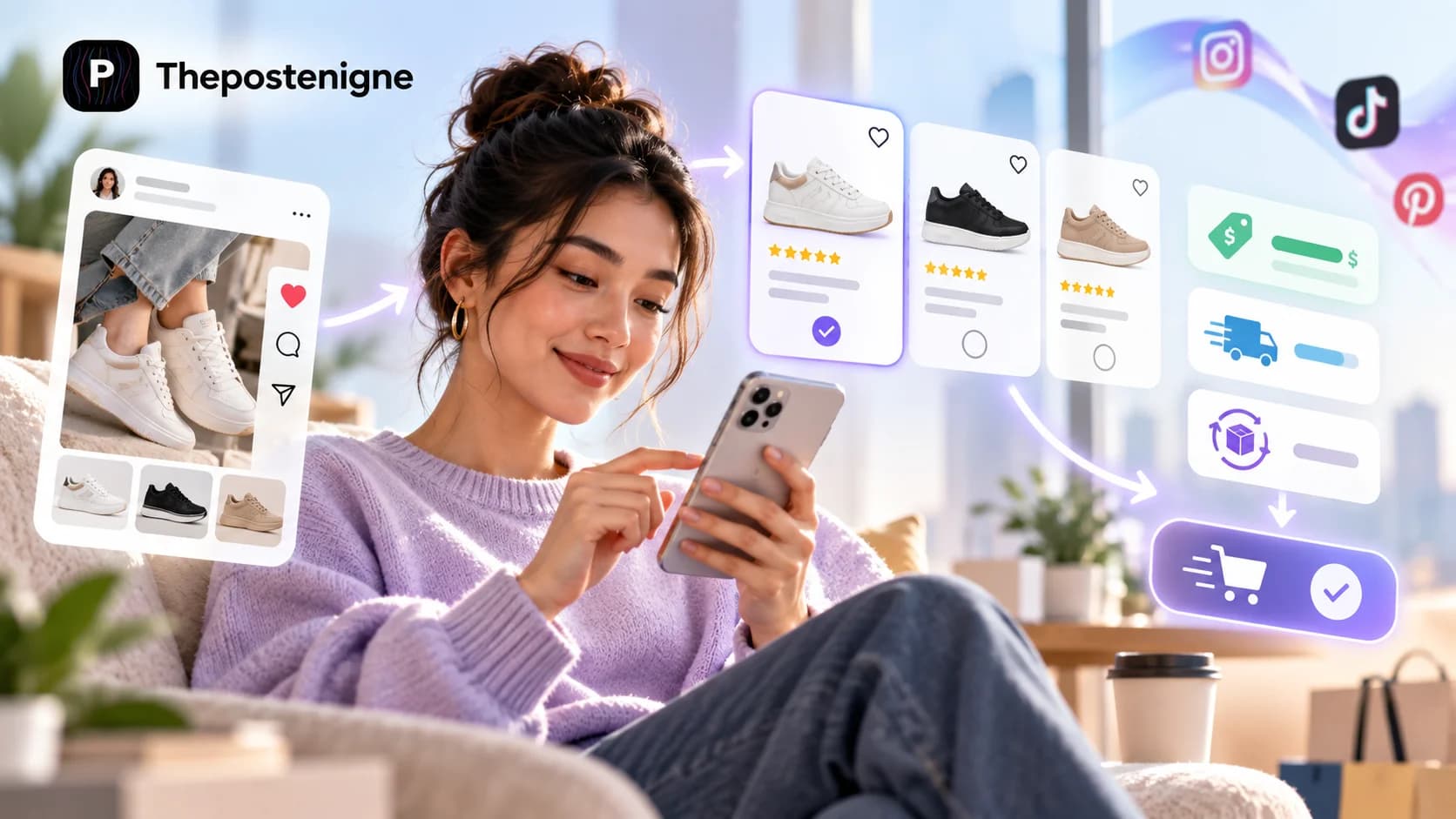
Help time-conscious shoppers move from interest to purchase faster with clearer product information, concise comparisons, visible pricing, delivery details, and low-friction social content.
Online shoppers don't always want more information.
Sometimes they want the right information faster.
Which product is right for me?How much does it cost?When will it arrive?Can I return it?What's the difference between these two options?
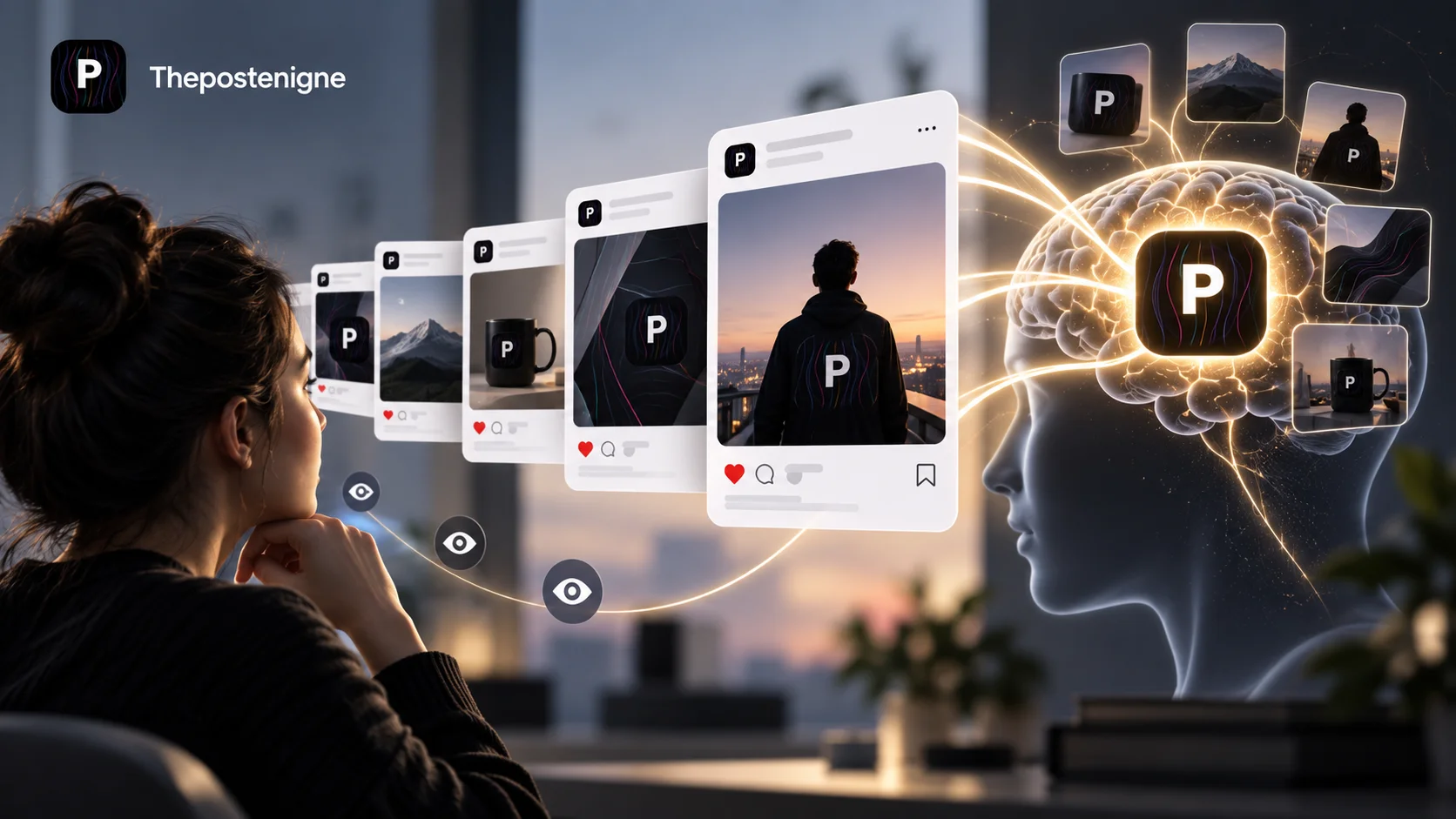
NIQ's 2026 Consumer Outlook identifies rising cognitive fatigue and says consumers are valuing fewer, clearer choices that combine price, quality, and values rather than feature-heavy complexity. NIQ — Consumer Outlook: Guide to 2026
The pressure doesn't stop at product information. DHL's 2026 ecommerce research found that 93% of U.S. shoppers describe themselves as convenience-driven, prioritizing fast, free delivery and easy returns. Globally, DHL found that 67% of online shoppers have abandoned carts because of the delivery offering. DHL — U.S. Shoppers: Speed, Trust, and Transparency Now Decide Online Purchase DHL — 2026 E-Commerce Trends Report
So the goal isn't to give shoppers less information.
It's to make the important information easier to understand and act on.
Make the Main Decision Obvious
When customers encounter a product on social media, they shouldn't have to work out the basic proposition themselves.
Start with:
What is this?
Then:
Who is it for?
Then:
Why should I choose it?
For example:
Wireless headphones
Best for: Long flights
Battery: 40 hours
Noise cancellation: Yes
Price: $149
That is easier to process than a paragraph describing ten features.
NIQ's 2026 research specifically points to rising cognitive fatigue and says consumers value fewer, clearer choices. NIQ — Consumer Outlook: Guide to 2026
The rule is:
Lead with the information that changes the decision.
IMAGE 2 — DECISION SNAPSHOT
Replace Feature Overload With Clear Choices
More features don't necessarily make a product easier to choose.
They can make the decision harder.
Instead of:
12 specifications
try:
3 reasons to choose this product
For example:
Choose Model A if you want:
Lightweight design + long battery + portability
Choose Model B if you want:
More power + larger capacity + advanced controls
This gives customers a decision framework.
NIQ's research says consumers are actively looking for ways to simplify purchasing, while streamlined formats and low-friction experiences are becoming more important. NIQ — Consumer Outlook: Guide to 2026
The goal isn't to hide product details.
It's to organize them around the customer's decision.
Best combination:
Option → Best for → Main difference → Recommendation
Put Price and Value Into Context
Customers don't always need the lowest price.
They need to understand what they're getting for the price.
Instead of:
$199
show:
$199 — Includes charger + carrying case + 2-year warranty
Or:
$49/month — Includes 5 users + unlimited projects
Clear pricing can remove a major reason to hesitate.
ICSC's July 2026 consumer survey found that shoppers are increasingly evaluating delivery fees, return policies, and fulfillment options alongside price, with transparency and flexibility influencing where they shop. ICSC — Consumers Reassess the Cost of Convenience
So your social content can communicate:
Price + what is included + delivery + returns
instead of simply displaying a discount.
IMAGE 3 — PRICE AND VALUE
Show Delivery and Return Information Early
A customer may already want your product and still hesitate because of what happens after the purchase.
Questions include:
“When will it arrive?”
“How much is shipping?”
“Can I return it?”
“What happens if it arrives damaged?”
DHL's 2026 global ecommerce report found that 67% of online shoppers have abandoned a cart because of the delivery offering. DHL — 2026 E-Commerce Trends Report
The customer doesn't necessarily need a long shipping policy in a social post.
A simple line can help:
Ships tomorrow · Free delivery · 30-day returns
That gives the shopper useful information before they have to search for it.
Research published in the Journal of Retailing and Consumer Services in 2026 also found that providing information about future stages of the ecommerce journey can help customers move between stages and influence actual purchasing behavior. ScienceDirect — Crafting the Customer E-Journey
IMAGE 4 — DELIVERY AND RETURNS
Use Comparisons to Reduce Decision Time
When customers are deciding between similar products, comparison content can save them time.
For example:
The customer doesn't have to open several pages to understand the difference.
Research on social commerce also supports the value of clear product information. A 2024 study of 416 Instagram-following consumers found that review quantity, review quality, product information, and responsiveness can influence seller trust and purchase intention. ScienceDirect — Determinants of Trust and Purchase Intention in Social Commerce
Use comparison content for:
Products
Plans
Bundles
Sizes
Features
Use cases
But make the comparison honest.
The goal is to help the customer choose, not make every option look identical.
######Table
Answer the “Is This Right for Me?” Question
A shopper can understand a product perfectly and still not know whether they should buy it.
That's where “best for” content becomes useful.
For example:
This product is best for:
Small businesses with 1–5 employees
Not ideal for:
Large teams needing advanced permissions
That kind of clarity can actually increase confidence because you're helping customers self-select.
Try formats such as:
Best for beginners
Best for professionals
Best for small spaces
Best for travel
Best for occasional use
Best for heavy users
This also reduces unnecessary decision-making.
The shopper doesn't need to understand every specification.
They only need to know:
“Does this solve my problem?”
Remove Friction From Social-to-Purchase Journeys
Faster decisions don't happen only because of better content.
The journey itself also matters.
A typical social-shopping path can be:
Social post
↓
Product
↓
Information
↓
Checkout
Every additional step introduces another opportunity for the shopper to leave.
Sprout Social's 2026 ecommerce research highlights AI-led discovery, social shopping, and interactive video as major shifts in ecommerce, with social platforms increasingly becoming places where discovery and purchasing happen closer together. Sprout Social — 2026 Social Media Ecommerce Trends & Statistics
Your content should therefore make the next action obvious:
See product → Understand product → Shop product
And don't hide important information behind several clicks.
Turn Product Information Into Decision-Focused Content
This is where The Post Engine can fit naturally.
Instead of creating another generic product post, turn the information customers need into different decision-focused formats.
For example:
Product information
→ “Which one is right for you?” carousel
→ Feature comparison
→ Best-for post
→ Product demonstration
→ Price + value graphic
→ Shipping + returns Story
The same product information can support different customer questions without making every creative look identical.
→Social Commerce in 2026: What Customers Need Before They Buy From Social Media
That article focuses on the broader trust and purchase requirements of social commerce, while this one focuses specifically on reducing the time and effort required to make the decision.
IMAGE 5 — DECISION CONTENT SYSTEM
Frequently Asked Questions
Why do shoppers want faster decisions?
Rising cognitive fatigue, large product selections, and expectations for convenient ecommerce experiences make clear and streamlined information increasingly valuable. NIQ — Consumer Outlook: Guide to 2026
What information should a social commerce post include?
Start with:
Product
Best for
Main benefit
Price
Delivery
Returns
CTA
Not every post needs all seven, but the information should match the decision the customer is trying to make.
Should I show every product feature?
Not necessarily. Prioritize the features that help the customer decide. Too much information can create unnecessary complexity.
Does fast delivery really influence purchasing?
Yes. DHL's 2026 research found that 67% of online shoppers had abandoned carts because of the delivery offering. DHL — 2026 E-Commerce Trends Report
Do comparisons help customers choose?
Clear comparisons can reduce the amount of research customers need to do themselves. Product information, reviews, and responsiveness are also associated with trust in social commerce. ScienceDirect — Social Commerce Trust and Purchase Intention
Final Takeaway
Faster decisions don't mean rushing customers.
They mean removing unnecessary work.
Give shoppers:
Clear choices
Useful comparisons
Visible pricing
Delivery information
Return information
Best-for guidance
A simple next step
The process becomes:
See → Understand → Compare → Trust → Decide
The best social commerce content doesn't overwhelm customers with information.
It gives them the few pieces of information they need to confidently make the next decision.