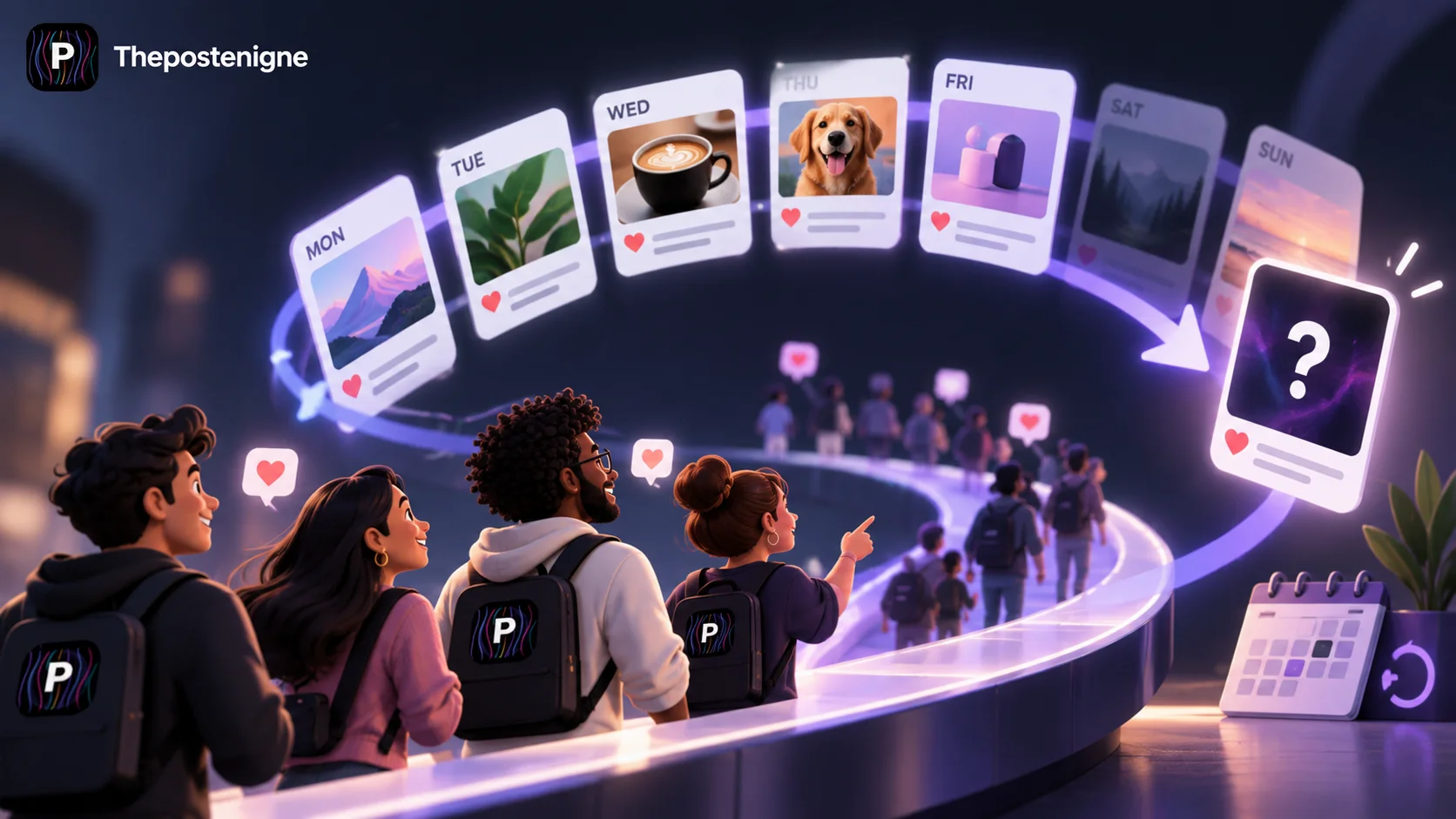
Turn fleeting social media attention into stronger brand recall with distinctive visual cues, memorable creative patterns, emotional associations, and consistent brand signals.
Getting someone to stop scrolling is only the first step.
They may watch your Reel, read your carousel, or pause on your product post.
But a more important question comes next:
Will they remember your brand afterward?
In a crowded social feed, attention can disappear almost immediately.
WARC's research on attention and memory highlights the need to connect advertising attention with longer-term brand effects rather than treating attention as the final objective. WARC — From Attention to Memory
That is where distinctive brand assets become important.
Kantar describes distinctive assets as recognizable elements such as colors, packaging, logos, slogans, characters, or other cues that help people connect communication with a brand. Kantar — What Are Distinctive Assets, and Why Are They Important?
The better approach is:
Don't just make content people notice. Make content they can connect back to your brand.
Why Attention Doesn't Automatically Create Memory
A person can remember an interesting video without remembering who made it.
That's a serious problem.
Your content may generate:
Views
Watch time
Shares
Comments
while the brand itself remains forgettable.
System1's research on advertising effectiveness emphasizes the importance of connecting creative attention with brand recognition and memory, rather than assuming that an entertaining ad automatically builds the brand. System1 — Building Brand Memory
So think about two questions:
Did they notice the content?
and:
Did they know it was ours?
You need both.
Give Your Brand Distinctive Visual Cues
Your social content doesn't need to look identical.
But it should contain recognizable elements that repeatedly connect it to the same brand.
These might include:
Colors
Typography
Shapes
Product presentation
Characters
Taglines
Sound
Recurring visual devices
Kantar's research on distinctive assets emphasizes the importance of clarity, consistency, and communication when building recognizable brand cues. Kantar — What Role Do Brand Cues Have in Brand Equity?
For a fashion brand, recognition might come from:
Color + typography + photography style
For a food brand:
Packaging + color + recurring sound
For a SaaS company:
Interface style + illustration system + distinctive language
The key is choosing a small number of cues and using them consistently.
IMAGE 2 — DISTINCTIVE BRAND ASSETS
Repeat the Right Elements Without Repeating the Content
Consistency doesn't mean publishing the same design every day.
It means repeating the brand cues while changing the story.
For example:
Same brand colors
→ Product launch
→ Customer story
→ Educational carousel
→ Behind-the-scenes Reel
→ Comparison post
The content changes.
The brand connection remains.
WARC's research on distinctive assets shows that repeated use can help audiences connect different pieces of communication to the same brand over time. WARC — Distinctive Brand Assets and Advertising Effectiveness
This is especially important on social media because customers may encounter your brand through many small exposures rather than one large campaign.
Think:
Many recognizable moments → one stronger memory structure.
Connect Emotion With Your Brand
People don't remember every piece of information they see.
Emotion can help make a moment more memorable.
But emotion alone isn't enough.
A funny video that nobody associates with your brand may build entertainment value without building brand memory.
System1's advertising research highlights the relationship between emotion, distinctiveness, and brand attribution when evaluating creative effectiveness. System1 — Creative Effectiveness
So instead of asking:
“What emotion should this post create?”
ask:
“What emotion should this brand become associated with?”
For example:
Playful → humor and unexpected visuals
Premium → elegance and control
Adventurous → movement and discovery
Comforting → warmth and familiarity
The emotion becomes stronger when it consistently connects to the brand.
IMAGE 3 — EMOTION + BRAND
Make Your Brand Easy to Recognize in the Feed
People scroll quickly.
Your brand cues may need to work before someone reads the caption.
Kantar explains that strong distinctive assets can act as mental shortcuts, helping consumers recognize and connect communication with a brand. Kantar — What Are Distinctive Assets?
This means recognition can come from:
A color combination
A familiar product shape
A recurring character
A distinctive opening shot
A recognizable sound
A consistent typography system
Imagine a customer sees your post without reading the account name.
Can they still think:
“I know this brand.”
That's the standard worth aiming for.
IMAGE 4 — FEED RECOGNITION
Build Memory Across Multiple Content Formats
Brand memory becomes stronger when the same recognizable cues appear across different formats.
One campaign might include:
Reel
→ Brand sound + recurring color
Carousel
→ Same typography + visual system
Story
→ Same language + design cue
Product creative
→ Same product presentation
Video ad
→ Same opening device
The format changes.
The memory cue doesn't.
Kantar's broader brand research shows that distinctive assets work together with positioning, product experience, advertising associations, and relevance to strengthen the overall brand. Kantar — BrandZ and Brand Growth Insights
So don't build memory around a logo alone.
Build it around a recognizable combination of cues and experiences.
Measure Whether People Remember the Brand
Likes don't tell you whether people remember your brand.
You need different evidence.
Look for:
Branded search growth
Direct traffic
Brand mentions
Unaided awareness
Ad recall
Recognition studies
Brand-lift results
System1's advertising effectiveness research uses Brand Memory Lift as one way of evaluating whether creative remains associated with the correct brand rather than simply generating attention. System1 — Brand Memory
That illustrates an important distinction:
Engagement tells you that people interacted. Brand memory tells you whether the interaction stayed with them.
You don't need every individual social post to produce measurable brand lift.
Instead, look for patterns across campaigns and repeated creative exposure.
Turn Brand Memory Into a Consistent Content System
You don't need every post to look like a branding campaign.
Instead, decide which elements should consistently appear across your social content.
For example:
Primary color
Typography
Product framing
Opening visual
Tone of voice
Recurring phrase
Then create different stories around them.
This is where The Post Engine can fit naturally into the production process: you can maintain a recognizable creative direction while producing different social formats for different campaigns.
For example:
Brand system
→ Product post
→ Educational carousel
→ Promotional creative
→ Quote graphic
→ Short video
The goal isn't to make every asset identical.
It's to make the assets feel like they belong to the same brand.
→How to Create Social Media Content That Feels Native to Each Platform
Adapt the format without losing the memory cues that make the brand recognizable.
IMAGE 5 — BRAND SYSTEM
Frequently Asked Questions
What is brand memory?
Brand memory is the network of associations people hold about a brand and their ability to recognize or recall it when a relevant need appears.
Why are distinctive brand assets important?
They act as mental shortcuts that help people recognize and connect communication to a brand. Kantar — What Are Distinctive Assets?
Does consistent branding make social content repetitive?
No. Consistency should apply to recognizable brand cues, not every creative idea.
Is emotional content enough to build brand memory?
No. Emotion can increase memorability, but it becomes more commercially useful when people can connect that emotion back to the correct brand.
How can I make my brand recognizable while people scroll?
Use a small, consistent set of recognizable elements:
Color
Typography
Visual device
Product presentation
Sound
Tone
Then repeat them across different stories and formats.
Final Takeaway
Attention is temporary.
Memory can last much longer.
The goal isn't simply:
“Did someone stop scrolling?”
It is:
“Will they recognize and remember our brand later?”
Build that memory through:
Distinctive cues
Consistent use
Emotional associations
Recognizable creative
Repeated exposure
Meaningful experiences
The process becomes:
Attention → Recognition → Association → Memory
A memorable social post isn't necessarily the loudest one.
It's the one people can connect back to your brand after the scroll is over.