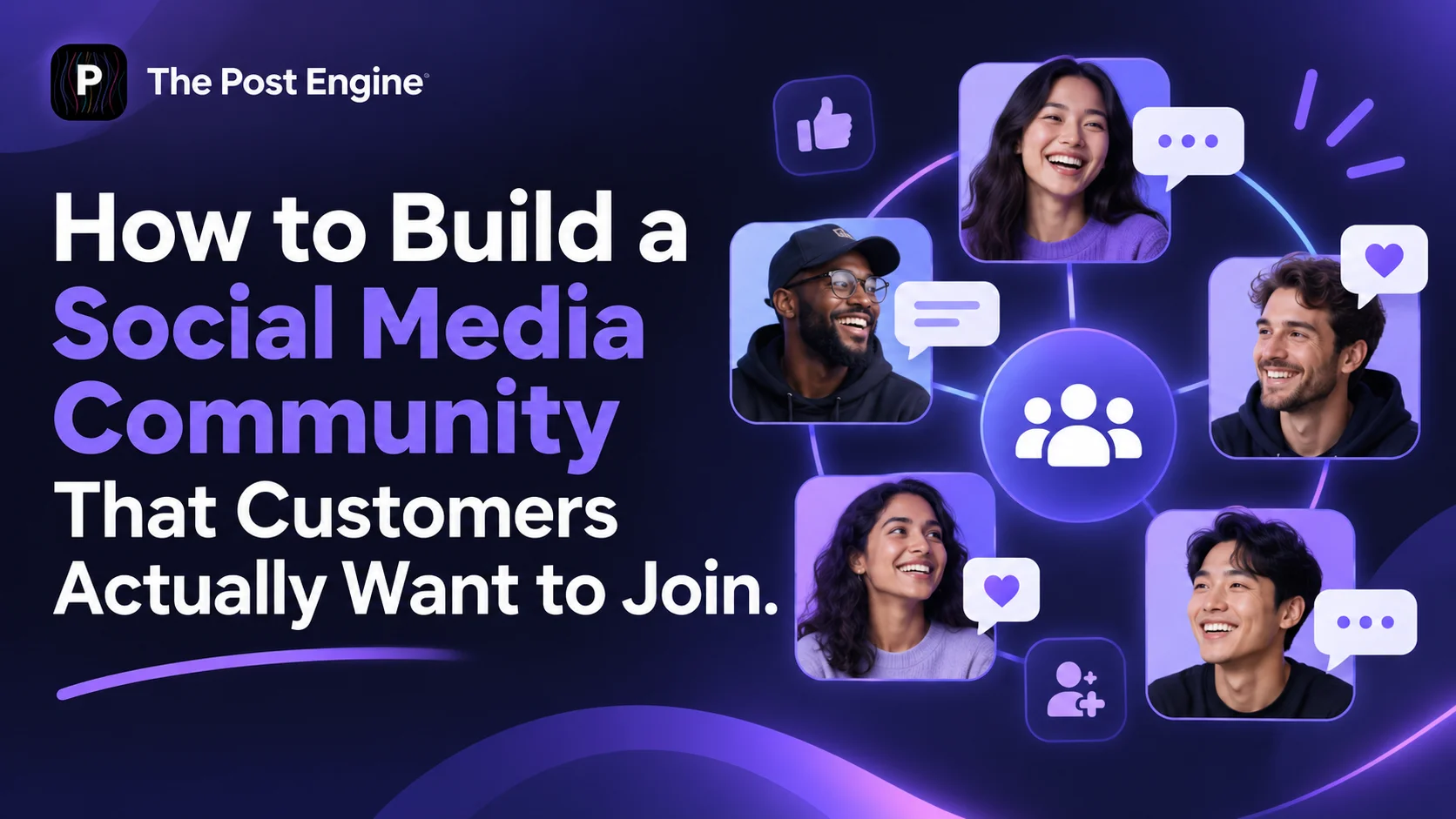
Learn how to build a social media community customers actually want to join using shared interests, meaningful conversations, member recognition, useful content, and consistent participation.
A social media audience is not automatically a community.
Followers can see your posts, scroll past them, and disappear.
A community is different.
People talk to each other, share experiences, ask questions, recognize familiar members, and feel that they belong to something.
That's becoming increasingly important for brands. HubSpot's 2026 Social Media Trends research identifies community-first platforms as a major area of investment, while its 2026 strategy research found that 39.7% of marketers said moving from broad platforms toward niche communities had been their most effective diversification strategy.
HubSpot — 2026 Social Media Trends Report
HubSpot — How to Create a Great Social Media Strategy in 2026
The opportunity is not to create a bigger follower count.
It's to create a place customers actually want to come back to.
What Makes a Social Media Community Different?
A social media audience is mainly connected to your content.
A community is connected to each other.
That difference changes the goal.
Instead of:
“How can we get more people to see this post?”
you start asking:
“How can we give these people a reason to interact with one another?”
A useful community has:
A shared interest
A clear purpose
Member participation
Recurring conversations
A sense of belonging
Research supports the importance of these peer connections. Clutch's April 2026 research found that 95% of consumers who regularly participate in online communities have discovered helpful information there, while 98% trust product or service recommendations from other community members. Clutch — 95% of Consumers Have Found Helpful Information in Online Communities
This is why a community shouldn't feel like a second advertising channel.
It should feel like a useful place to be.
Give People a Reason to Join
“Join our community” is not a strong reason by itself.
People need to know:
What's in it for me?
Your answer could be:
Get expert advice
Meet people with similar interests
Access exclusive content
Share your work
Get early product access
Participate in challenges
Ask questions
Learn from other customers
For example:
Weak:
“Join our Facebook Group.”
Stronger:
“Join 5,000 home-organizing fans sharing small-space ideas, product recommendations, and before-and-after transformations.”
The second message explains the experience, not simply the platform.
Reddit's own research into online communities similarly emphasizes belonging, shared interests, collective knowledge, and authenticity as reasons people value communities. Reddit for Business — Find Your People: Brands, Belonging, and Online Communities
Best combination:
Specific audience + shared interest + clear benefit
Build Around an Interest, Not Your Product
One of the biggest mistakes brands make is creating a community that is essentially:
“People who like our products.”
That's usually too narrow.
Instead, build around the larger interest behind the purchase.
For example:
Running shoe brand
Instead of:
“Our shoe customers”
build around:
People training for their next race
Coffee brand
Instead of:
“People who buy our coffee”
build around:
Home coffee enthusiasts
Photography software
Instead of:
“Our customers”
build around:
People improving their photography
This gives members something to discuss even when you're not promoting a product.
HubSpot's community-building examples repeatedly emphasize adapting the community experience to the interests and behavior of each platform rather than forcing the brand's marketing structure onto the audience. HubSpot — How These 6 Social Media Marketers Built Loyal Brand Communities
Best combination:
Customer interest + shared identity + useful conversations
IMAGE 2 — COMMUNITY INTEREST
Create Conversations Instead of Announcements
A community cannot grow if every post sounds like a press release.
Compare:
“Our new collection is available now.”
with:
“What's the one feature you wish every backpack had?”
The second creates a reason for people to respond.
Other conversation starters include:
“What's your biggest challenge with...?”
“Which option would you choose?”
“Show us how you use yours.”
“What should we test next?”
“What would you change?”
The goal is not simply to collect comments.
It's to create conversations between members.
HubSpot recommends participatory content such as polls, Q&As, challenges, and community-created content as part of effective community engagement. HubSpot — How to Create a Great Social Media Strategy in 2026
Reddit's current organic strategy training also teaches brands to focus on high-value content and authentic participation, including AMAs, rather than simply broadcasting promotional messages. Reddit for Business — Organic Strategies
Best combination:
Question → Member response → Member response → Brand contribution
Give Members a Role in the Community
People participate more when they feel they are contributors, not spectators.
Give your members ways to shape the community.
For example:
Ask members to suggest topics
Let them vote on future content
Feature member projects
Invite expert members to answer questions
Run challenges
Ask for product feedback
Create recurring community prompts
Meta's newer community features show this direction clearly. Facebook introduced fan challenges that allow creators to give followers prompts to create their own content, and Meta reported more than 1.5 million challenge entries in three months, generating reactions from more than 10 million people. Meta — Bringing Fans and Creators Closer Together on Facebook
The principle is simple:
Give people something to contribute, not just something to consume.
IMAGE 3 — MEMBER PARTICIPATION
Recognize and Reward Participation
A community doesn't need prizes for every interaction.
Sometimes recognition is enough.
You can highlight:
Helpful answers
Member stories
Creative projects
Top contributors
Interesting opinions
Community milestones
Meta has been adding explicit recognition features to community experiences. Threads introduced community champion badges for members who regularly contribute and keep conversations going. Meta — Introducing Threads Communities
You can create your own recognition system even without platform badges.
For example:
Member of the Week
Best Community Tip
Customer Spotlight
Top Contributor
The important thing is that recognition should reward useful participation, not simply activity for activity's sake.
Create Community Rituals People Can Return To
A community becomes easier to participate in when people know what happens next.
Create recurring formats such as:
Monday: Weekly question
Wednesday: Member spotlight
Friday: Community challenge
Monthly: Live Q&A
Quarterly: Community showcase
These become rituals.
People don't have to wonder:
“What should I post here?”
because the community gives them a reason to return.
Facebook Groups are a good example of this model at scale. Meta says almost 1.8 billion people use Facebook Groups every month, with groups organized around shared interests, advice, and connection. Meta — Facebook Local, Groups and Communities
The lesson isn't that every brand needs a Facebook Group.
It's that recurring shared interests create reasons for people to come back.
IMAGE 4 — COMMUNITY RITUALS
Choose the Right Platform for Your Community
Don't build a community simply because a platform is popular.
Choose the place where your audience naturally wants to interact.
Facebook Groups
Useful for:
Local communities
Hobbies
Customer support
Longer conversations
Meta says Facebook Groups are used by people to connect around shared interests, seek advice, and build relationships. Meta — Facebook Groups Update
Threads Communities
Useful when the community revolves around:
Opinions
Niche interests
Ongoing conversations
Topic-based discussion
Meta launched Communities on Threads around specific topics and has since expanded them, adding recognition features for active members. Meta — Introducing Threads Communities
Useful when customers already gather around a specific problem, hobby, product category, or interest.
But the brand should participate carefully.
Reddit's own community guidance emphasizes authentic engagement, high-value organic content, and AMAs rather than treating communities as simple advertising channels. Reddit for Business — Organic Strategies
The rule is:
Go where the conversation already exists.
IMAGE 5 — PLATFORM CHOICE
Measure Community Health, Not Just Follower Growth
A community can grow in size while becoming less useful.
That's why follower count alone isn't enough.
Look at:
Active contributors
Comments per discussion
Member-to-member replies
Returning participants
Member-generated content
Questions answered by members
Shares and recommendations
Community sentiment
One especially useful metric is:
How many people participate more than once?
A person who comments once isn't necessarily part of your community.
Someone who repeatedly asks questions, answers others, shares experiences, and returns every week is much stronger evidence of community health.
There is also an important warning here: more participation is not automatically better. A 2026 academic study of 805 social-media brand-community participants found that sustained participation could also contribute to information overload and social-media fatigue. ScienceDirect — Exploring the Dark Side of Continuous Social Media Brand Community Participation
So don't optimize for maximum activity.
Optimize for:
Useful, sustainable participation.
Build Community Content With The Post Engine
Community building requires more than creating promotional posts.
You need a steady mix of:
Questions
Member spotlights
Educational posts
Challenges
Polls
Community announcements
Discussion starters
With The Post Engine, you can create the visual content that supports these recurring community formats while keeping your brand's creative direction consistent.
For example:
Community question
Branded discussion graphic
Member spotlight
Customer feature post
Weekly challenge
Challenge announcement
Community tip
Educational carousel
Monthly recap
Community highlights
The key is that the content supports the community conversation rather than replacing it.
You can also connect this article to your existing:
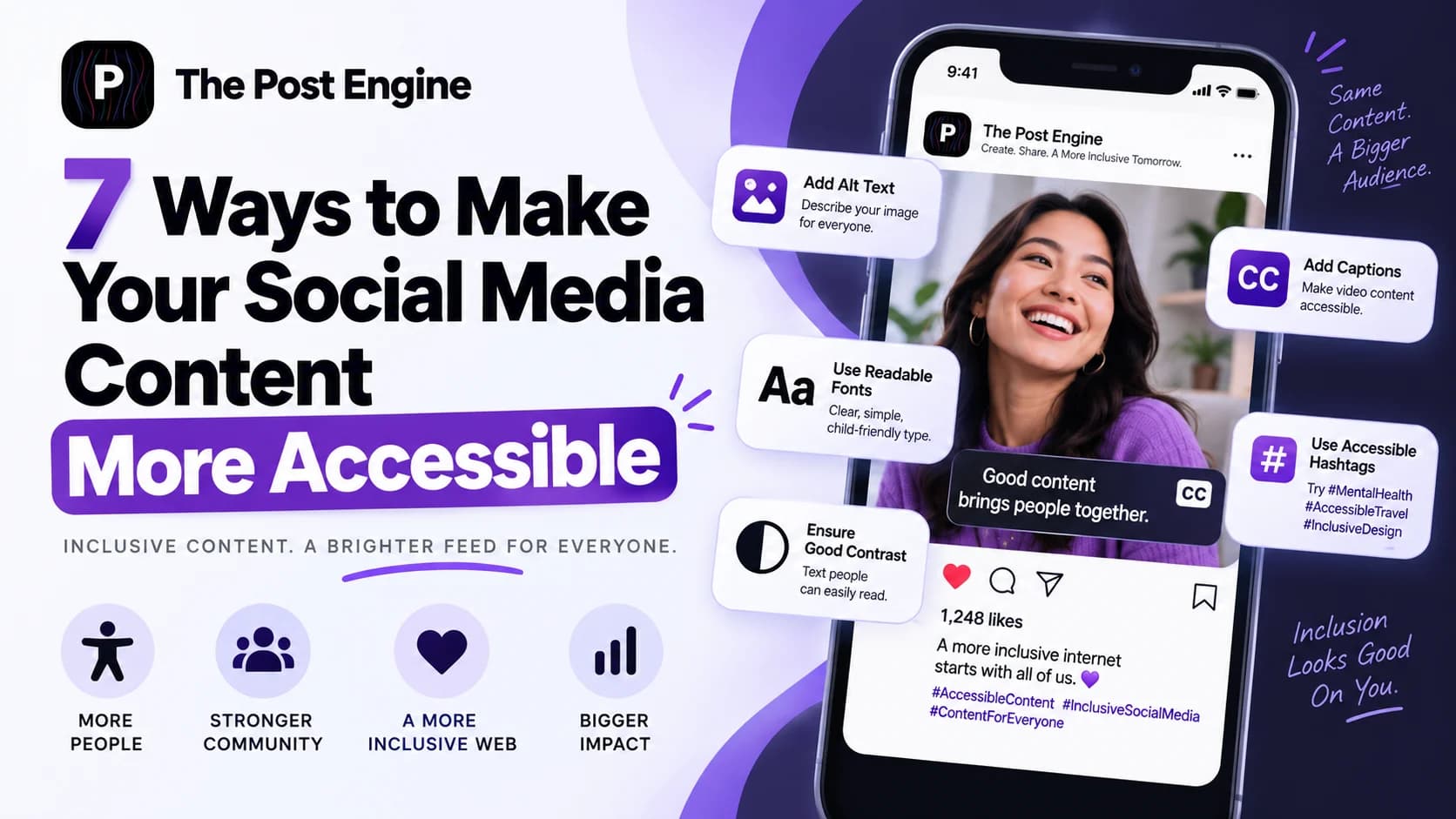
How to Make Your Social Media Content More Accessible
That gives community managers another practical layer for making community content easier for more people to consume.
IMAGE 6 — THE POST ENGINE
Frequently Asked Questions
What is a social media community?
A social media community is a group of people connected by a shared interest, identity, problem, or goal who interact with one another—not just with a brand.
How do I get people to join a brand community?
Give them a clear reason to join, such as useful advice, exclusive access, shared interests, challenges, expert conversations, or opportunities to connect with other members.
Should my community be focused on my product?
Not necessarily. It is often stronger to build around the broader interest or problem that connects customers to the product.
What platform is best for building a community?
There isn't one universal answer. Choose based on where your audience already has meaningful conversations. Facebook Groups, Threads Communities, Reddit, and other platforms serve different types of communities. Meta — Facebook Groups Meta — Threads Communities Reddit for Business — Find Your People
How do I know whether my community is healthy?
Look beyond member count. Track returning participants, member-to-member conversations, helpful contributions, community-created content, and whether members are finding value.
Final Takeaway
A community isn't built by telling people:
“Join us.”
It's built by giving them a reason to stay.
Give people:
A shared interest
A useful purpose
A reason to participate
Recognition when they contribute
Recurring reasons to return
The process becomes:
Shared interest → Conversation → Participation → Recognition → Belonging
The best brand communities don't feel like another marketing channel.
They feel like a place where customers already belong.