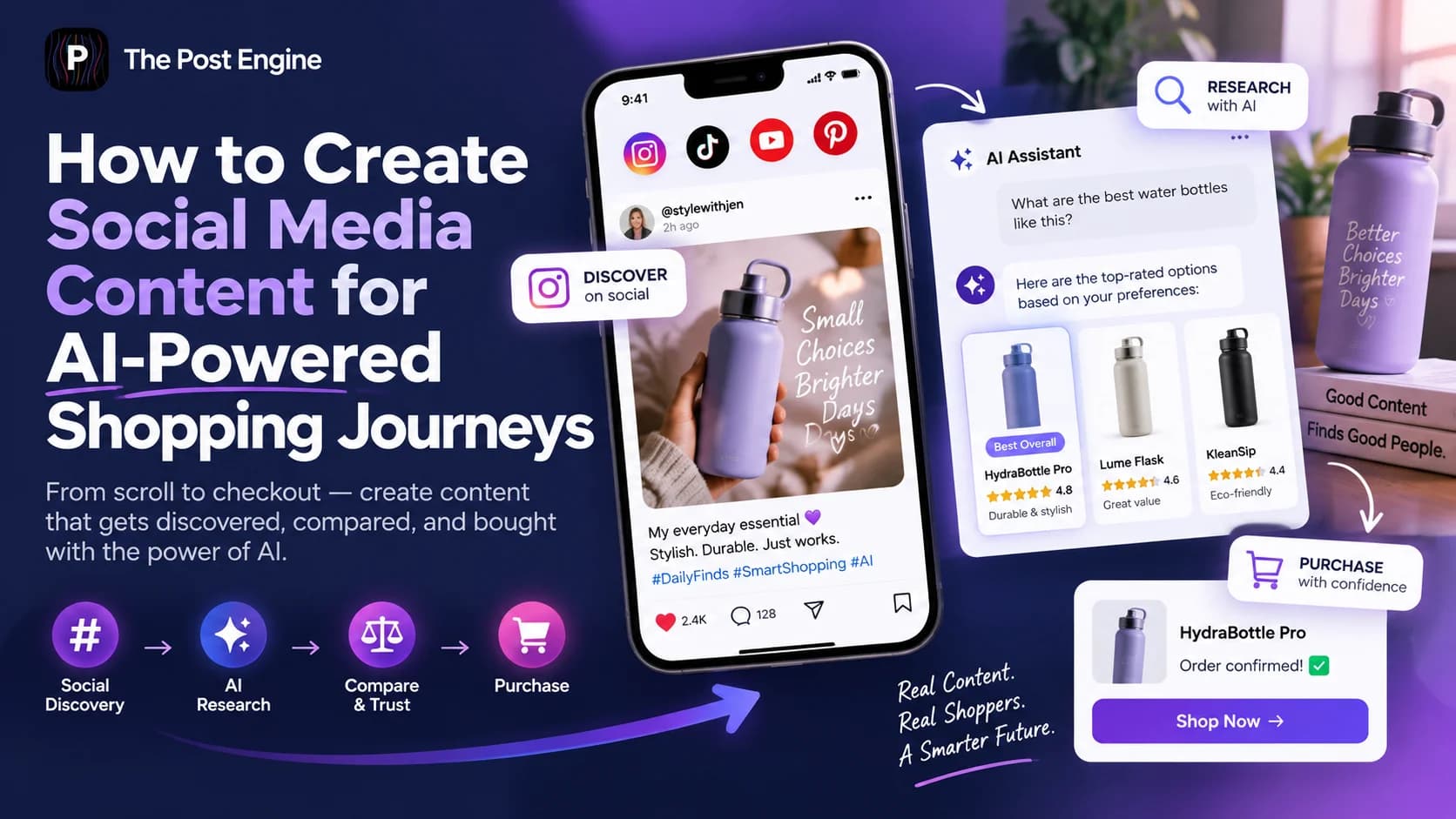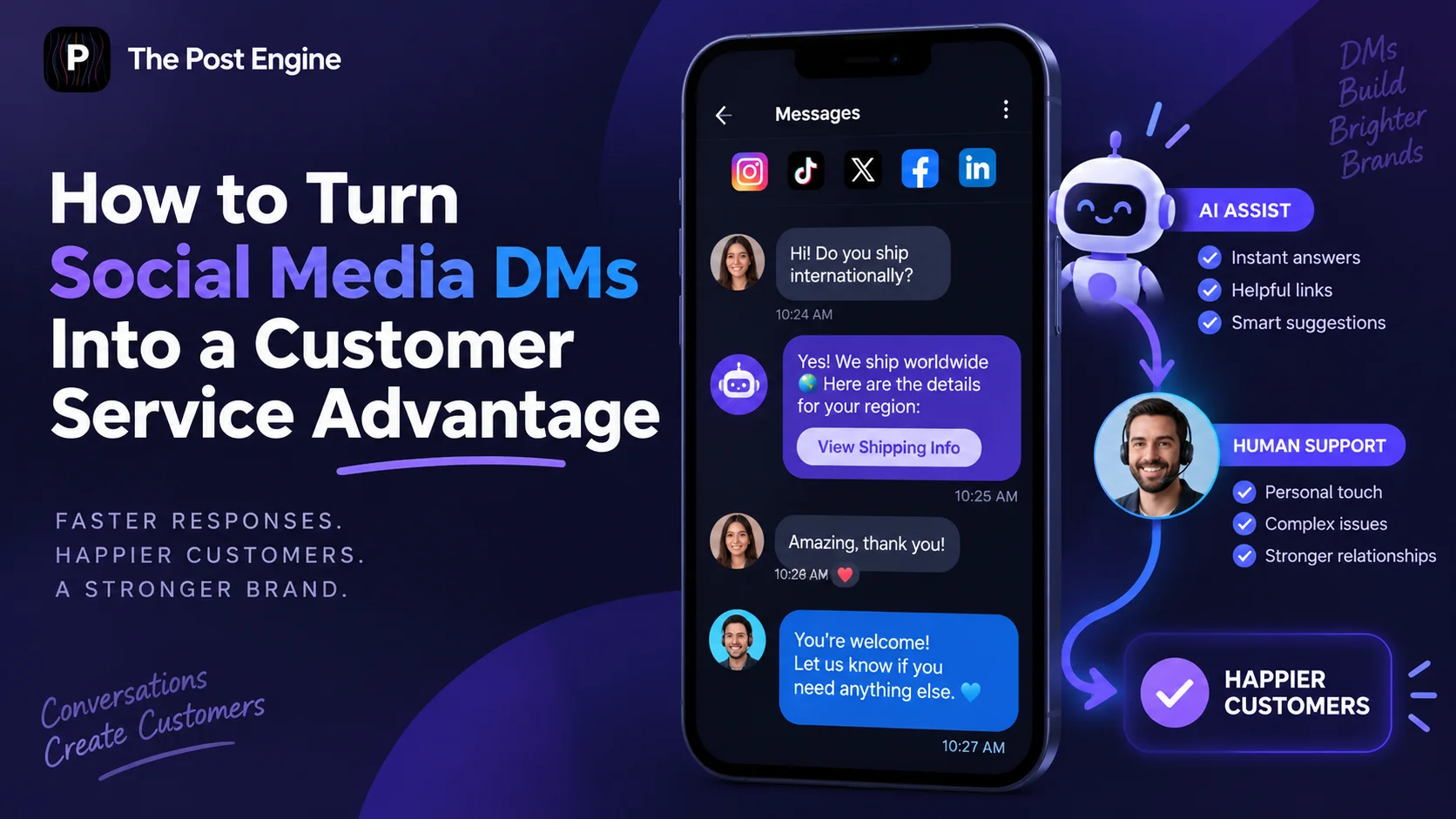
Learn how to create social media content for the new scroll-to-chat-to-cart journey, using short-form video, product content, messaging, AI, and conversational commerce to turn discovery into sales.
The path from discovering a product to buying it is changing.
A customer might see a Reel while scrolling, become interested, open a product page, ask a question in WhatsApp or Instagram, receive a recommendation, and complete the purchase through the same conversation.
This is the “scroll-to-chat-to-cart” journey.
Meta describes this shift as a move away from traditional search-and-transact shopping toward a journey driven by AI, short-form video, creators, and conversational messaging. Meta — From Scroll to Chat to Cart: Trends Reshaping How India Shops
The change is already producing measurable results. In Meta and Retailers Association of India research, retailers using Business Messaging and Click-to-WhatsApp campaigns saw an average 61% improvement in ROAS, 62% more leads, and 22% higher order values. Meta — AI Fuels India’s Omnichannel Shopping Surge
The better approach is:
Create content that starts the conversation, not just content that earns the click.
What “Scroll-to-Chat-to-Cart” Actually Means
Traditional ecommerce often looks like:
Search → Product Page → Checkout
The newer journey can look like:
Scroll → Discover → Chat → Ask → Decide → Buy
The important difference is the conversation in the middle.
Customers can ask:
“Which one is better for beginners?”
“Do you ship to my city?”
“What size should I choose?”
“Is this available today?”
That conversation can remove uncertainty before the customer reaches checkout.
Salesforce describes conversational commerce as the intersection of social, mobile, messaging, and embedded commerce, with direct messaging giving customers a more personalized way to interact with brands. Salesforce — What Is Conversational Commerce?
The social post starts the journey.
The conversation helps complete it.
Create Content That Starts With Discovery
The first step is still getting someone to stop scrolling.
Short-form video is particularly important because social feeds increasingly function as product-discovery environments.
Meta's 2026 India retail research found that 96% of social product discovery occurred on Meta platforms among the shoppers studied, while 71% of consumers purchased within a couple of days after seeing creator content on Meta technologies. Meta — AI Fuels India’s Omnichannel Shopping Surge
But discovery content doesn't need to explain everything.
Its job is to create:
Interest
Curiosity
Recognition
A reason to ask
For example:
“Which one would you choose for a small apartment?”
or:
“Not sure which size is right? Ask us.”
The objective changes from:
“Click our product.”
to:
“Start a conversation.”
IMAGE 2 — DISCOVERY CONTENT
Give Customers a Reason to Start a Conversation
People won't send a message just because a brand says:
“DM us.”
Give them a reason.
Useful conversation starters include:
“Not sure which size to choose?”
“Send us your room dimensions and we'll recommend an option.”
“Want help choosing between these two?”
“Message us for today's availability.”
“Tell us what you're looking for and we'll suggest the best option.”
This turns messaging into part of the product experience.
Meta's Business Agent can now answer business-specific questions, make product recommendations from a catalog, qualify leads, and hand conversations to a human when needed. Meta — Be There for Every Customer With Meta Business Agent
The important principle is:
Give the customer something useful to ask about.
Turn DMs Into Product Guidance
Once someone starts a conversation, don't send them straight back to a generic product page.
Use the conversation to reduce uncertainty.
For example:
Customer:
“I need headphones for long flights.”
Brand:
“Do you prefer stronger noise cancellation or longer battery life?”
Customer:
“Noise cancellation.”
Brand:
“We'd recommend Model A. Here's why…”
Now the conversation has become personalized product guidance.
Meta reports that more than one billion active threads with businesses occur across WhatsApp, Messenger, and Instagram every day, and its Business Agent can make catalog-based recommendations directly inside these conversations. Meta — Be There for Every Customer With Meta Business Agent
This is where conversational commerce becomes different from ordinary customer support.
The DM isn't just answering:
“Where is my order?”
It can also answer:
“What should I buy?”
IMAGE 3 — CONVERSATIONAL RECOMMENDATION
Use AI to Support Conversational Shopping
AI can make this journey easier to manage at scale.
It can help with:
Product questions
Recommendations
Availability checks
Lead qualification
Basic support
Appointment booking
Meta says its Business Agent is being expanded globally and can respond in a brand's tone and local languages while allowing a team member to step in when necessary. Meta — Be There for Every Customer With Meta Business Agent
Meta also reported that Business AI conversations were already exceeding one million weekly conversations in Mexico and the Philippines in early 2026. Meta — 2026: AI Drives Performance
But AI should not turn the experience into:
“Bot → Bot → Bot → Goodbye.”
The best structure is:
AI handles routine questions → Human handles complexity → Customer reaches a decision
AI should make the conversation faster, not colder.
Keep the Conversation Moving Toward Purchase
Starting a chat is not the goal.
Helping the customer reach the next step is.
A useful conversation can follow:
Question
↓
Clarification
↓
Recommendation
↓
Proof
↓
Product link
↓
Purchase
For example:
“Which camera is better for travel?”
↓
Ask about budget and use
↓
Recommend one model
↓
Show a comparison
↓
Send product link
↓
“Ready to see the available options?”
Meta's research on Click-to-WhatsApp campaigns found strong acquisition and sales results, while its 2026 shopping report says messaging is increasingly connecting discovery, purchase, and post-purchase support in a single conversation. Meta — AI Fuels India’s Omnichannel Shopping Surge
The key is to make the next action obvious without making the interaction feel aggressive.
Connect Content Across the Customer Journey
The social post shouldn't operate alone.
Think about the journey as connected content:
Reel
→ Creates interest
Carousel
→ Explains the product
Story
→ Answers a common question
DM
→ Gives personalized advice
Product page
→ Provides detailed information
Checkout
→ Completes the purchase
This also means your messaging needs to match your social content.
If the Reel promises:
“Find the right laptop for video editing.”
the DM should help with exactly that.
The product page should continue the same story.
And the checkout should not introduce unnecessary surprises.
Meta's 2026 messaging research emphasizes this connected journey across discovery, conversion, and post-purchase interactions. Meta — AI Fuels India’s Omnichannel Shopping Surge
IMAGE 4 — CUSTOMER JOURNEY
Create Scroll-to-Chat Content With The Post Engine
The content goal is no longer simply:
“Create an attractive post.”
It is:
“Create a post that leads naturally to the next conversation.”
With The Post Engine, you can create different social formats around the same product or campaign.
For example:
Product
→ Discovery Reel
→ Comparison post
→ FAQ graphic
→ Product Story
→ Promotional creative
→ DM CTA
The workflow becomes:
Customer need
↓
Content angle
↓
Social creative
↓
Conversation CTA
↓
DM
↓
Recommendation
↓
Purchase
→How to Turn Social Media DMs Into a Customer Service Advantage
IMAGE 5 — POSTENGINE WORKFLOW
Frequently Asked Questions
What does “scroll-to-chat-to-cart” mean?
It describes a shopping journey where customers discover a product while scrolling, continue through a conversation with the brand, and then purchase.
Why are DMs important for social commerce?
Messaging can remove uncertainty by allowing customers to ask questions, receive recommendations, check availability, and get support without leaving the platform.
Can AI handle social shopping conversations?
Yes. AI business agents can handle routine questions, recommend products, qualify leads, and escalate conversations to humans. Meta — Be There for Every Customer With Meta Business Agent
What should a social post say if the goal is to start a DM?
Give people a specific reason to message:
“Need help choosing?”
“Not sure which size?”
“Want today's availability?”
“Tell us your budget and we'll recommend one.”
Is this only relevant to WhatsApp?
No. The same concept can work across Instagram DMs, Facebook Messenger, WhatsApp, TikTok messaging, and other conversational commerce channels. Salesforce specifically identifies social, mobile, messaging, and embedded commerce as connected parts of conversational commerce. Salesforce — What Is Conversational Commerce?
Final Takeaway
The customer journey is becoming less linear.
Instead of:
Search → Website → Checkout
it can look like:
Scroll → Discover → Chat → Get Advice → Trust → Cart
That changes the role of social content.
Your post doesn't always need to close the sale.
Sometimes its job is to start the right conversation.
The process becomes:
Scroll → Interest → Chat → Recommendation → Cart
Create content that gives customers a reason to start talking, then make the conversation useful enough to keep them moving toward a purchase.