Discover how to create social media content for silent and passive audiences who scroll, watch, read, and browse without posting or commenting, and how to turn quiet attention into customer action.
Not everyone who sees your social media content will like, comment, or share it.
Some people simply watch, read, compare, save information, visit your profile, and leave.
That doesn't mean they aren't interested.
Research published in Information, Communication & Society in 2026 describes lurking as one of the most common forms of online participation and argues that consuming content without posting can still be a meaningful form of participation. Taylor & Francis — The Silent Majority Online
A 2025 Bournemouth University study of 630 UK skincare consumers aged 18–74 went further, finding that passive behavior exists on a continuum and can be connected to offline outcomes such as purchasing and recommending products. Bournemouth University — Lurking on Social Media Research
The better approach is:
Don't create content only for people who interact publicly. Create content for people who are quietly paying attention.
Why Silent Audiences Matter
Your most visible followers aren't necessarily your entire audience.
A smaller group may comment frequently while a much larger group simply watches.
Northeastern University reported on research showing that as many as 90% of social-media users can be “lurkers”—people who consume content without actively interacting with posts. Northeastern University — Social Media Lurkers Research
The exact percentage varies by platform, community, and definition, so it shouldn't be treated as a universal benchmark.
But the underlying behavior is clear:
Many people consume more than they contribute.
That means a post with ten comments could still be reaching thousands of quiet viewers.
And those quiet viewers may eventually:
Visit your website
Research your product
Buy
Recommend you
Return later
Bournemouth University's research specifically found that passive social-media behavior can connect to offline consumer outcomes, challenging the assumption that non-interacting users are simply “inactive.” Bournemouth University — Lurking on Social Media
Understand Why People Scroll Without Posting
There isn't one type of silent viewer.
Someone may avoid posting because they:
Don't want to share personal information
Don't feel comfortable commenting
Don't have anything to add
Prefer to observe before participating
Are tired of social interaction
Are researching something privately
Research published in Technological Forecasting and Social Change found that social-media fatigue was the strongest factor associated with lurking, followed by reluctance to disclose information. The study analyzed 786 valid questionnaire responses. ScienceDirect — Would You Go Invisible on Social Media?
This matters for marketers.
Don't assume:
“They aren't commenting, so they don't care.”
Sometimes the opposite is true.
They may simply prefer quiet consumption.
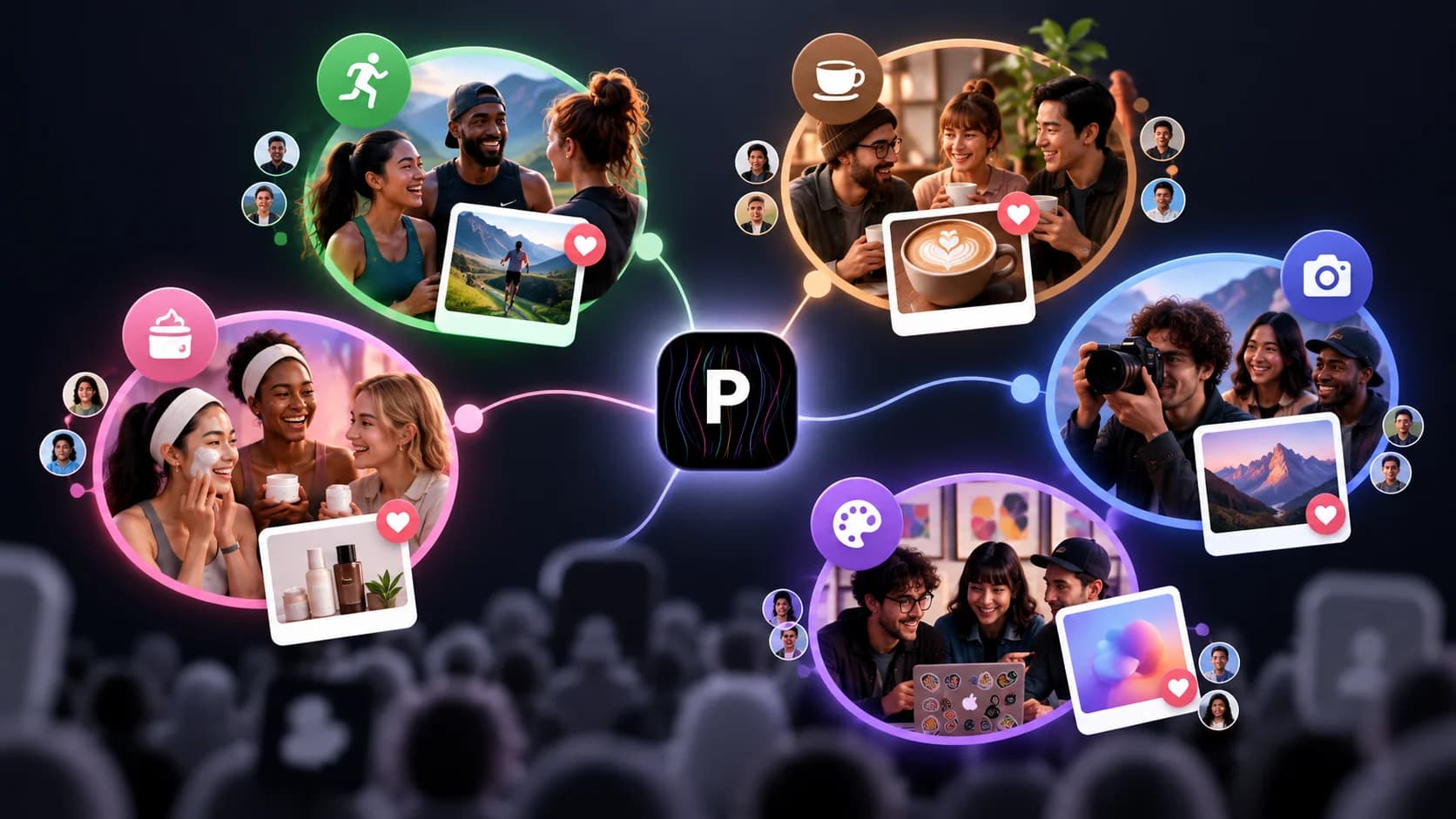
IMAGE 2 — TYPES OF SILENT VIEWERS
Make Your Content Easy to Understand Without Interaction
A passive viewer won't necessarily ask you to explain something.
Your content needs to communicate the important information by itself.
For example, instead of:
“Our new laptop is better.”
show:
Battery: 14 hours
Weight: 1.2 kg
Best for: Remote work
Charging: USB-C
The viewer can understand the product without commenting.
This works especially well for:
Product comparisons
Buying guides
How-to posts
Checklists
Product demonstrations
Before-and-after content
Research in Frontiers in Communication also distinguishes passive behaviors such as viewing and browsing from active behaviors such as commenting and sharing, while noting that passive consumption can still reflect interest and exploratory intent. Frontiers — From Scroll to Sale
The principle is simple:
Give quiet viewers enough information to keep moving without requiring them to participate.
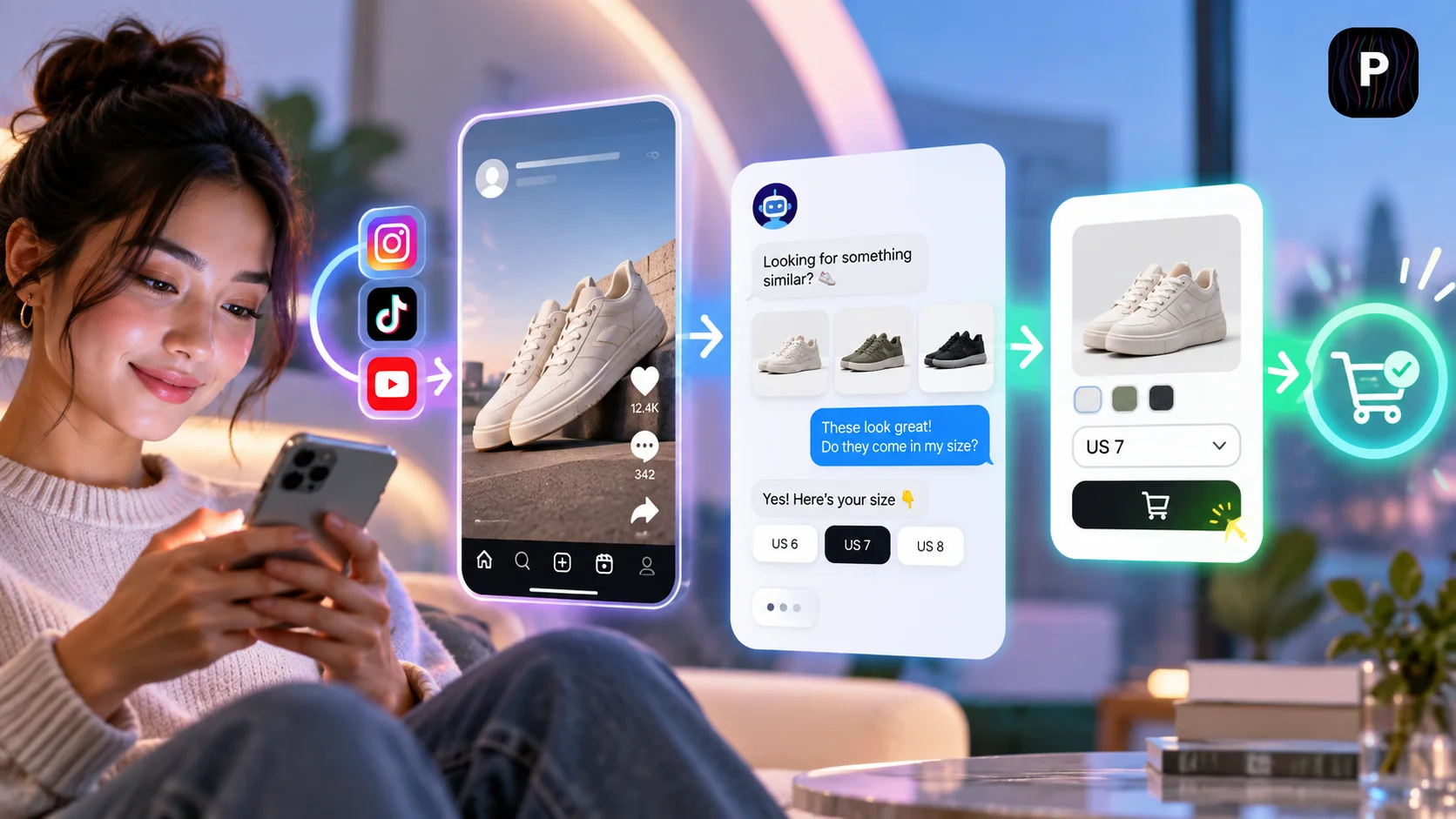
IMAGE 3 — QUIET CONSUMPTION
Create Content That Helps People Decide Quietly
Some people don't engage publicly because they're still researching.
They might be asking themselves:
“Is this worth it?”
“Which option is better?”
“Would this work for me?”
“Can I trust this brand?”
Create content that helps answer those questions.
For example:
Comparison
Product A vs Product B
Demonstration
How the product actually works
Review
What customers experienced
Use Case
Who should use it
Buying Guide
What to look for before choosing
These formats don't require a comment to be useful.
A 2025 study in Future Business Journal found that social-media advertising, trust, and customer reviews are associated with online purchase intention, reinforcing the importance of evidence even when the customer isn't publicly engaging with the content. Future Business Journal — Social Media Advertising, Trust and Customer Reviews
For ecommerce brands, this is also where The Post Engine can fit naturally: instead of creating another generic promotional post, use one product or topic to create a comparison, demonstration, buying guide, or proof-focused creative that answers a quiet buyer's question. The Post Engine
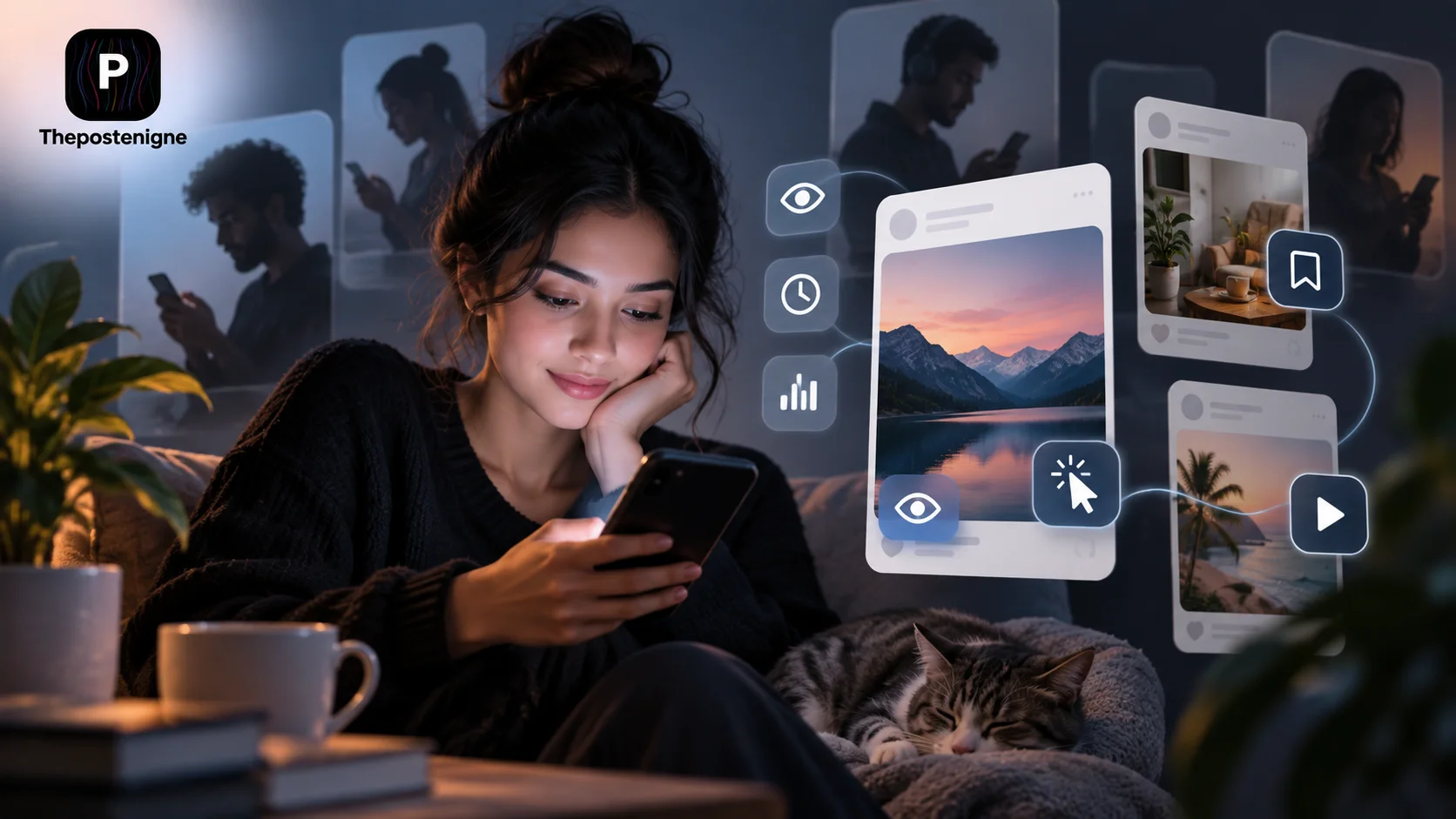
IMAGE 4 — DECISION CONTENT
Give Passive Viewers Low-Pressure Ways to Act
Not every customer wants to comment.
So don't make commenting the only next step.
Offer quieter actions:
Visit the profile
Save the post
Click the product link
Read the guide
Watch the next video
Browse the collection
Send a DM
For example:
“Want to compare the two models? See the full comparison.”
This gives the viewer a next step without asking them to publicly participate.
It also creates a more natural journey:
See → Understand → Explore → Decide
Instead of:
See → Comment
Build Trust Without Demanding Engagement
Silent viewers often need repeated exposure before they take action.
That's why your feed should contain different types of proof:
Real product demonstrations
Customer reviews
Clear specifications
Founder or team content
Frequently asked questions
Behind-the-scenes material
A 2025 peer-reviewed study on social-media brand interactions found that different user behaviors can have different motivations and outcomes, reinforcing the importance of understanding passive engagement rather than treating all users as one group. Wiley — Embarrassed to Observe: The Effects of Directive Language in Brand Conversation
The goal isn't to pressure quiet viewers into speaking.
It's to give them enough evidence to feel comfortable taking the next step.
IMAGE 5 — TRUST CONTENT
Measure More Than Comments and Likes
Passive audiences require a broader measurement approach.
Instead of looking only at:
Likes
Comments
also look at:
Views
Reach
Watch time
Saves
Shares
Profile visits
Link clicks
Product clicks
Conversions
Instagram's professional analytics provide separate measures for views, accounts reached, interactions, accounts engaged, saves, and shares, allowing brands to see more than public reactions. Instagram — About Instagram Insights
You can also compare content types.
Discovery Content
Measure:
Reach + Views
Useful Content
Measure:
Saves + Shares
Product Content
Measure:
Clicks + Product Actions
Conversion Content
Measure:
Sales + Leads
This helps answer a better question:
“Are quiet viewers moving closer to becoming customers?”
IMAGE 6 — METRICS
Turn Silent Audience Insights Into Better Content
Passive audiences don't give you as much direct feedback as active commenters.
So look for patterns.
Which posts generate:
Longer watch time?
More saves?
More profile visits?
More product clicks?
More conversions?
Suppose your audience rarely comments on product posts but frequently saves comparison carousels.
That tells you something.
Create more comparison content.
Or perhaps your audience doesn't comment on tutorials but watches them to completion.
Create more educational video.
The process becomes:
Observe behavior → Find the pattern → Create more of what helps
The 2025 Bournemouth research is particularly useful here because it argues that lurking orientation can vary between consumers rather than treating all passive users as one homogeneous group. Bournemouth University — Lurking on Social Media Research
That means your strategy shouldn't simply be:
“Target lurkers.”
It should be:
“Understand what different quiet viewers are trying to accomplish.”
Frequently Asked Questions
What are social media lurkers?
Social media lurkers are people who consume social content but rarely post, comment, or participate publicly. Recent research increasingly treats this as a legitimate form of participation rather than simply “non-engagement.” Taylor & Francis — The Silent Majority Online
Are passive social media users valuable to brands?
Yes. Bournemouth University research found that passive engagement can be associated with offline outcomes including purchases and recommendations. Bournemouth University — Lurking on Social Media
Why do people scroll without posting?
Reasons can include privacy concerns, social-media fatigue, preference for observation, and simply not wanting to contribute publicly. ScienceDirect — Would You Go Invisible on Social Media?
What content works well for passive audiences?
Useful formats include:
Comparisons
Demonstrations
Buying guides
Reviews
Checklists
Educational videos
Product explainers
Should I try to make passive viewers comment?
Not necessarily.
Some people prefer consuming content privately. Give them multiple ways to continue:
Save → Click → Browse → DM → Purchase
Final Takeaway
Not every customer wants to raise their hand.
Some will simply:
Watch
Read
Compare
Save
Browse
Remember
Buy
That doesn't make them an unimportant audience.
It makes them a quiet audience.
The process becomes:
Show → Explain → Build trust → Offer a next step → Measure behavior
Don't create social content only for the people willing to comment.
Create content for the much larger group that may never say anything—but is still paying attention.