Social media is becoming more about watching, browsing, and consuming than posting. Explore why audiences are becoming quieter and what this means for brands creating content in 2026.
Social media used to be described as a place where everyone could create, share, and participate.
That is still true.
But the balance is changing.
More people are using social platforms primarily to:
Watch
Read
Browse
Discover
Compare
Follow creators
while fewer are regularly creating public posts of their own.
Ofcom's 2026 research found that 89% of UK adult internet users use at least one social media platform, but only 49% said they post, share, or comment, down from 61% in 2024. Meanwhile, 24% mainly read without interacting much, and another 25% mainly like other people's posts. Ofcom — Adults' Media Use and Attitudes 2026
New academic research points in the same direction. A 2026 CHI field study found that participants spent an average of 28.29 minutes per day in passive social-media use versus 13.64 minutes in active use. ACM CHI 2026 — Flow on Social Media? Rarer Than You'd Think
The important takeaway for brands is:
Your audience doesn't need to post to be paying attention.
What Is Changing in Social Media Behavior?
The biggest change isn't that people are abandoning social media.
They're changing how they use it.
Ofcom's research shows social-media membership remains extremely high, especially among younger adults: 97% of UK internet users aged 16–34 use at least one social platform. But active participation has become more cautious. Almost half of users said they worry that posting could cause problems for them in the future, up 6 percentage points year over year. Ofcom — Adults' Media Use and Attitudes 2026
That creates an important distinction:
Social media use is still high.
Public creation is becoming more selective.
People may still want to see what friends, brands, creators, and communities are doing without wanting to put themselves into the feed.
Research published in Current Psychology in 2026 also warns that “active” and “passive” use should not be treated as two simple personality types; they are better understood as different behaviors that can vary by context. Springer — Active and Passive Social Media Use
Why Are People Posting Less?
There is no single explanation.
Several forces can work together.
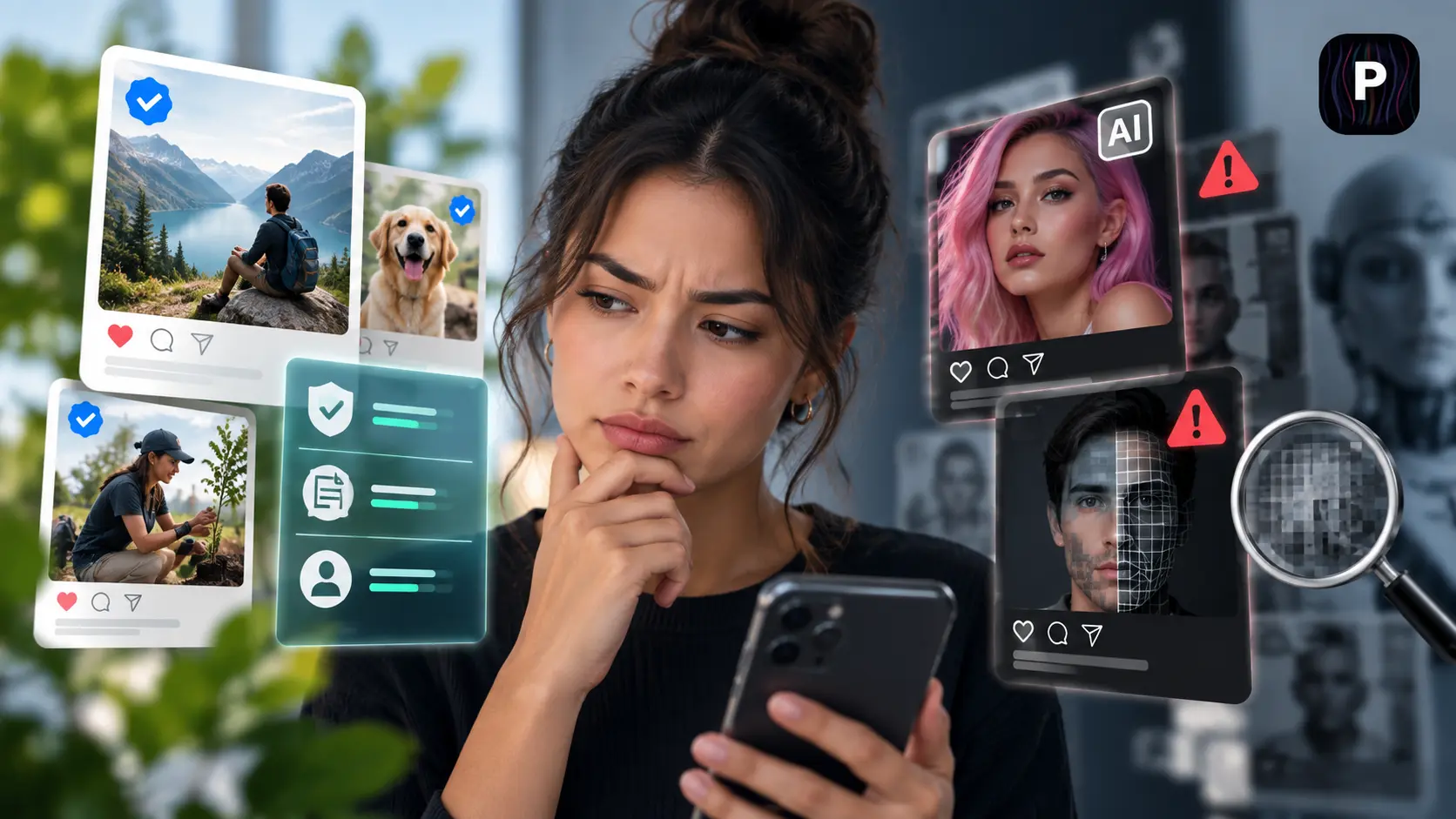
Privacy and permanence
Ofcom found that concerns about future consequences of posting have increased, making some people more cautious about what they publish publicly. Ofcom — Adults' Media Use and Attitudes 2026
Social fatigue
People can enjoy consuming social content without wanting the responsibility of constantly responding, posting, or maintaining a public identity.
More professionalized feeds
As social content becomes more polished and creator-driven, some ordinary users may feel they have less reason to contribute publicly.
More short-form video
A feed full of videos creates a natural watching environment.
The result is a shift from:
“What should I post?”
toward:
“What should I watch?”
That distinction matters for brands because a passive audience can still be a large commercial audience.
IMAGE 2 — WHY PEOPLE POST LESS
Why Video Is Increasing Passive Consumption
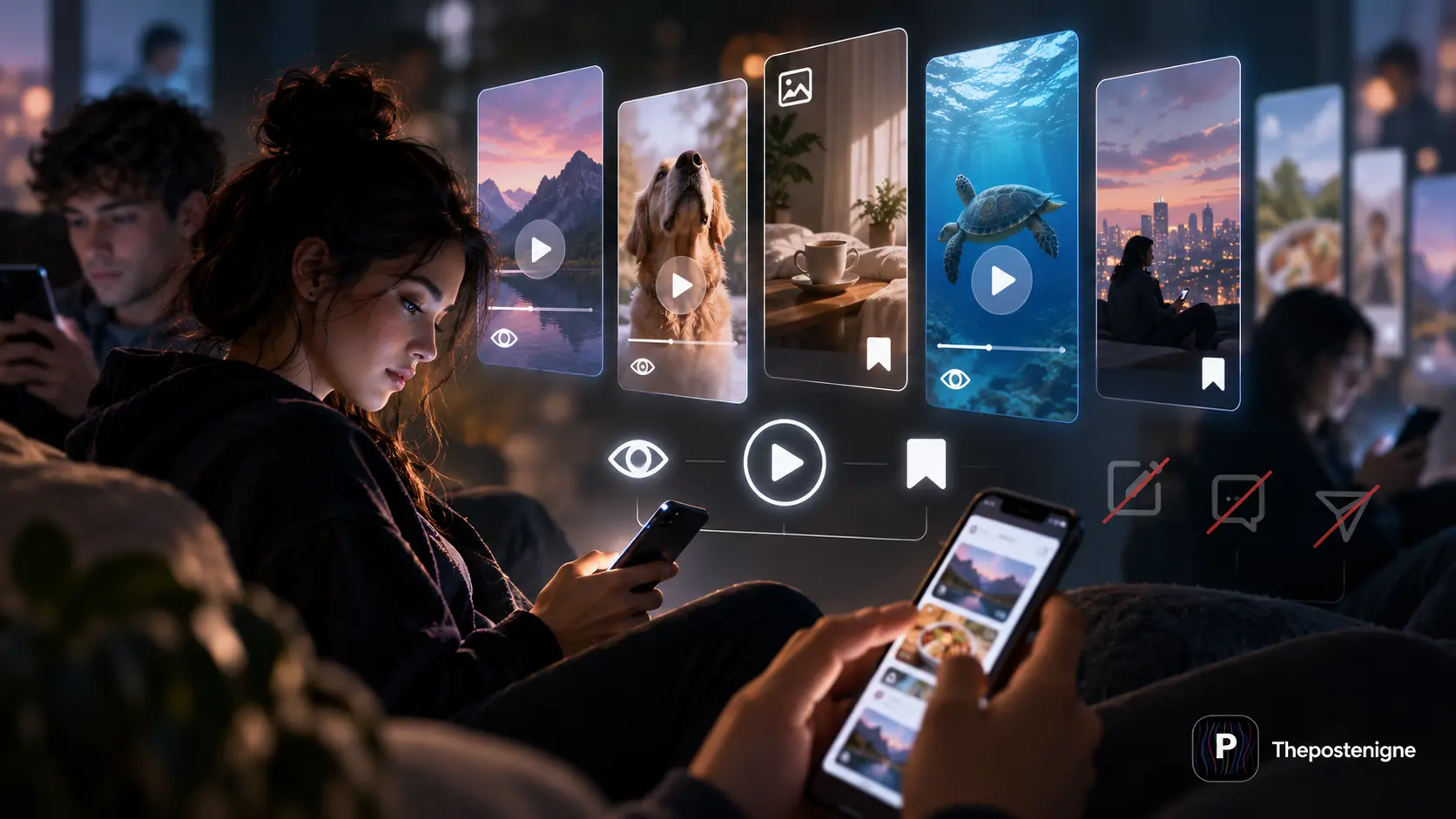
Short-form video is built for watching.
You don't need to create anything to participate.
You simply:
Open the app → Watch → Swipe → Watch again
The 2026 Reuters Institute Digital News Report illustrates how significant this video shift has become: 77% of people globally consume online news video each week, and social media and video networks are now the most widely used source of online news across its 48-country sample, at 54%. Reuters Institute — Digital News Report 2026
Its research also shows TikTok, Instagram, and YouTube driving much of the growth in video-led consumption. Reuters Institute — From Broadcast News to Streaming and Platforms
The implication goes beyond news.
Social feeds increasingly function like entertainment and discovery environments, where the primary user action is consumption.
So brands should make sure their content works even when the viewer does nothing else.
What Silent Audiences Actually Do
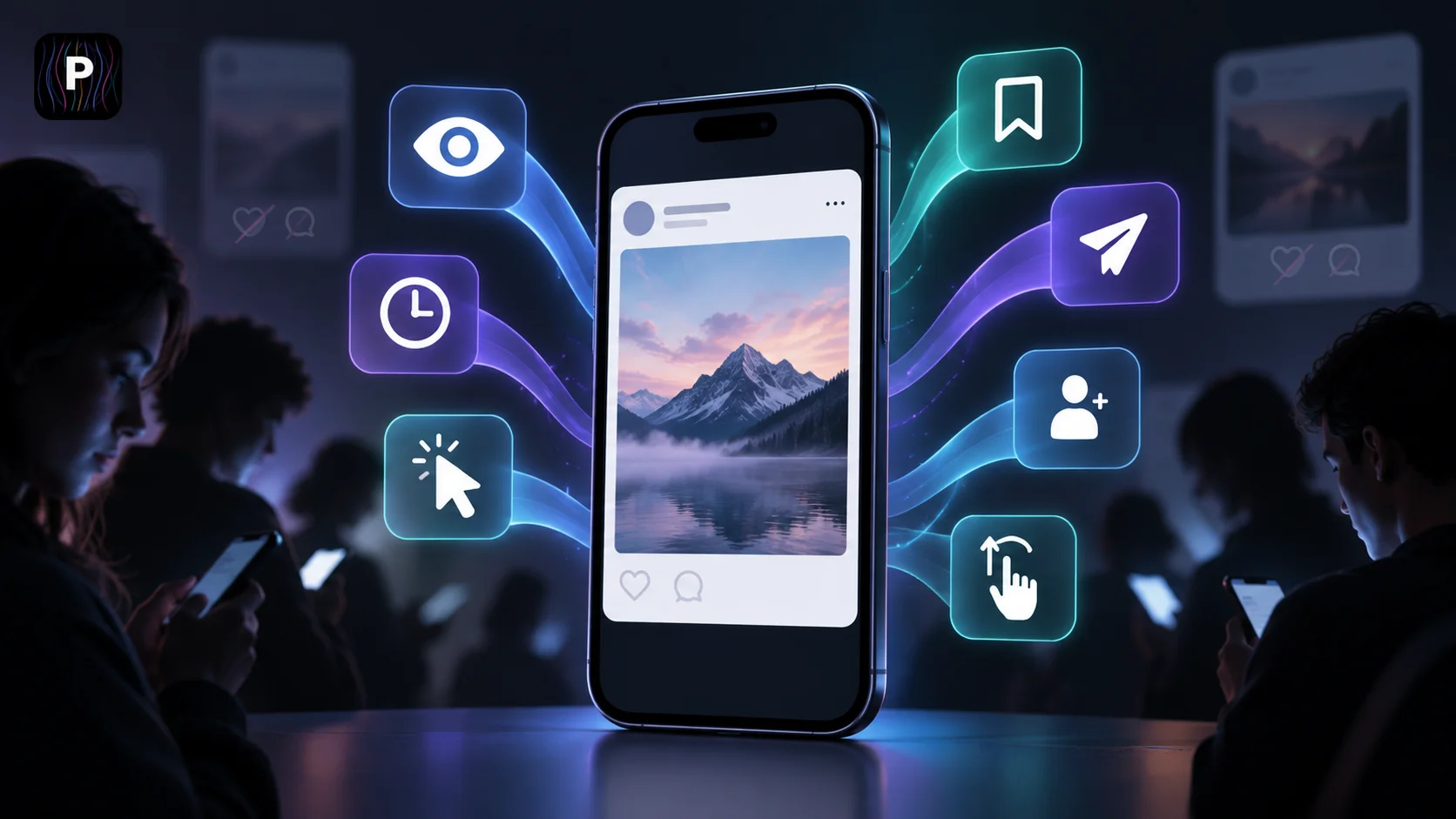
A person who doesn't post can still perform valuable actions.
They may:
Watch a Reel
Read a carousel
Save a post
Visit a profile
Open a product page
Send a private message
Share content privately
Search the brand later
Buy
A 2026 Teacher Tapp study provides a useful example of this behavior at a professional-audience level: among nearly 9,000 teachers, 49% watched videos and 44% read posts or articles, while only 4% posted a short update and 1% shared a blog they had written. Teacher Tapp — 2026 Social Media Report
The pattern is striking:
Consumption can be widespread even when creation is rare.
That's why a content strategy shouldn't depend on:
“Comment below.”
as the only desired outcome.
IMAGE 3 — CONSUMPTION ACTIONS
Create Content for Watching, Not Just Responding
When people are consuming rather than participating, your content has to communicate value without requiring an interaction.
Useful formats include:
Short tutorials
Product demonstrations
Step-by-step carousels
Before-and-after examples
Comparisons
Explainers
Visual checklists
For example, instead of:
“What's your opinion?”
a product brand might publish:
“3 things to check before buying a portable power station.”
The viewer doesn't need to comment.
They can simply learn.
This is particularly important because passive use can represent a meaningful share of total social time. The CHI 2026 field study found nearly twice as much daily time in passive social-media apps as active use among its 40 participants. ACM CHI 2026 — Social Media Use Patterns
The goal is:
Make the content useful before asking the audience to do anything.
Give Quiet Viewers Useful Next Steps
A passive audience doesn't mean an inactive customer journey.
You can offer low-pressure actions such as:
Save this guide
See the full comparison
Visit the product page
Watch Part 2
Read the full article
Send us a DM
Browse the collection
This creates:
Watch → Understand → Explore
rather than:
Watch → Comment
That distinction can also make your content more natural.
Someone who doesn't want to publicly interact can still take the next step privately.
This connects directly with your previous article:
The Hidden Engagement Problem: Why People Interact With Social Content Without Liking or Commenting
That article focuses on hidden actions; this one explains why the broader social audience is becoming more consumption-oriented in the first place.
Measure Consumption Differently
If fewer people post, public engagement becomes an even weaker picture of total audience behavior.
Instead of tracking only:
Likes
Comments
also monitor:
Views
Watch time
Reach
Saves
Shares
Profile visits
Link clicks
Product clicks
Conversions
Instagram provides professional accounts with metrics including views, accounts reached, interactions, accounts engaged, saves, and shares. Instagram — About Instagram Insights
YouTube Shorts also separates Views and Engaged views, giving creators another way to understand how audiences actually consumed video. YouTube — Get Started Creating YouTube Shorts
The question should be:
“What did people do after consuming this?”
rather than:
“How many people commented?”
IMAGE 4 — CONSUMPTION METRICS
Turn the Shift Into a Content Advantage
This behavioral shift can actually simplify your strategy.
You don't have to make every post interactive.
Instead, build different content around different audience behaviors.
For watchers
Create:
Short videos
Demonstrations
Stories
For readers
Create:
Carousels
Guides
Explanations
For researchers
Create:
Comparisons
Reviews
Specifications
For buyers
Create:
Product pages
Offers
Demos
Social proof
This is where The Post Engine can fit into your content system naturally.
One topic can be turned into multiple formats designed for different consumption behaviors:
Product topic
→ Short video for watchers
→ Carousel for readers
→ Comparison for researchers
→ Product creative for buyers
The objective isn't to force everyone into the same interaction.
Meet people where their behavior already is.
IMAGE 5 — CONTENT FOR DIFFERENT BEHAVIORS
Frequently Asked Questions
Are people really posting less on social media?
Recent research points in that direction, although the size of the change varies by market and how “active” behavior is defined. Ofcom found that 49% of UK adults posted, shared, or commented in its 2026 research, down from 61% in 2024. Ofcom — Adults' Media Use and Attitudes 2026
Does this mean people are leaving social media?
No. Social-media use remains widespread. Ofcom found that 89% of UK adult internet users used at least one social platform. Ofcom — 2026 Media Use and Attitudes
Why is passive consumption increasing?
Several factors may contribute, including privacy concerns, social fatigue, changing platform formats, and the growth of video-led feeds. Current research cautions against treating passive use as one single behavior with one cause. Springer — Active and Passive Social Media Use
Should brands stop asking people to comment?
No. Comments can still be valuable. The point is to avoid designing every piece of content around public participation.
What content works best for passive audiences?
Content that can communicate its value without requiring interaction:
Video
Tutorials
Comparisons
Demonstrations
Guides
Checklists
Product explainers
Final Takeaway
Social media isn't necessarily becoming less important.
It's becoming different.
People can spend significant time:
Watching instead of posting
Reading instead of commenting
Browsing instead of broadcasting
Saving instead of reacting
The 2026 research from Ofcom and the CHI field study both point toward a social environment where passive consumption is a substantial part of everyday use. Ofcom — Adults' Media Use and Attitudes 2026 ACM CHI 2026 — Flow on Social Media?
The process becomes:
Reach → Watch → Understand → Explore → Act
You don't need every customer to post about your brand.
You need your content to remain valuable even when the customer simply watches and keeps scrolling.